15 Best Coffee Beans: Top Picks, Reviews and Buying Guide
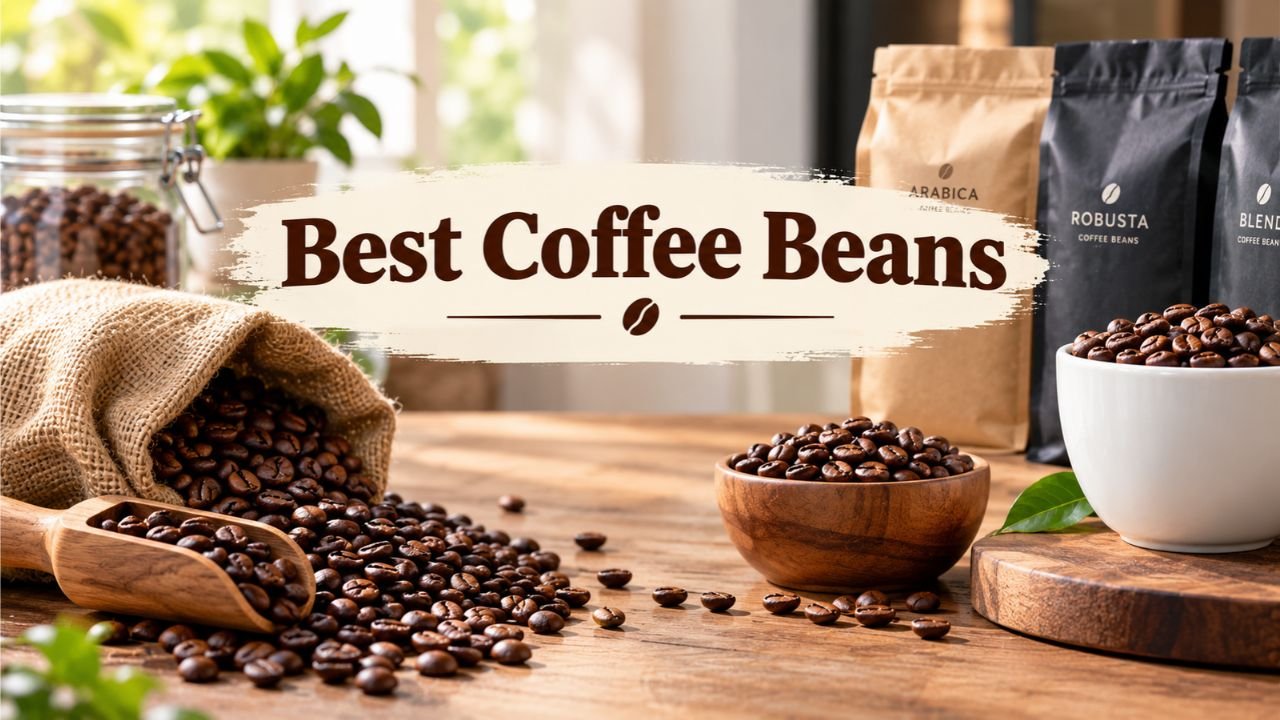
The best coffee beans combine fresh roasting, balanced flavor, consistent quality, and a roast profile that matches your brewing method. Stumptown Hair Bender is my overall recommendation for its versatility, Lavazza Super Crema is a strong choice for traditional espresso, and Peet’s Major Dickason’s Blend suits dark-roast drinkers. The best option ultimately comes down to freshness, flavor preferences, and how you brew.
Choosing the wrong coffee beans can leave your morning cup tasting bitter, overly acidic, flat, or unpleasantly smoky. Even an expensive espresso machine or precision grinder cannot fully compensate for beans that do not match your taste or have lost much of their original aroma.
A carefully selected bag of whole-bean coffee gives you greater control over flavor, body, sweetness, and extraction. It also lets you grind fresh coffee for different brewing methods instead of relying on one pre-ground size.
According to the National Coffee Association’s September 2026 National Coffee Data Trends report, 66% of American adults drank coffee during the previous day, and 83% of past-day coffee drinkers had coffee at home. With so much coffee prepared in home kitchens, choosing suitable beans can make a noticeable difference in an everyday routine.
The difficulty with identifying the 10 best coffee beans is that different drinkers expect different results. Someone who enjoys traditional Italian espresso may prefer a chocolatey Arabica-Robusta blend, while a pour-over enthusiast may want the citrus and berry characteristics of a lighter Ethiopian coffee.
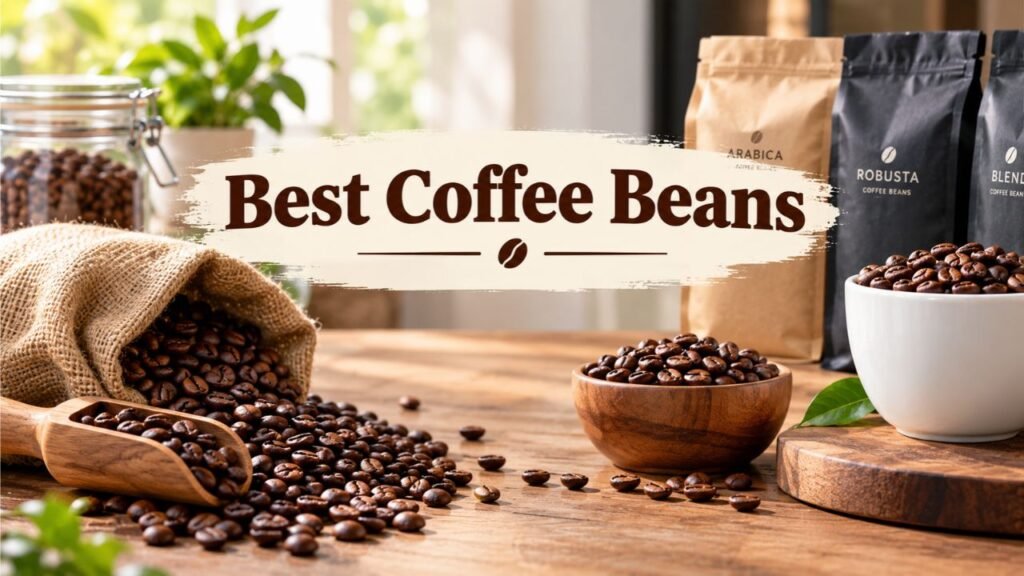
What stood out to me during the product comparisons was how much variation exists even among coffees carrying the same roast label. A medium roast from one brand can taste darker or brighter than a medium roast from another. Roast level alone never tells the complete story.
I selected 10 primary recommendations and five additional alternatives from 15 separate coffee brands commonly found through Amazon and major U.S. retailers. The reviews cover flavor descriptions, roast levels, strengths, drawbacks, brewing compatibility, value, and my research-based recommendations, followed by a detailed guide to buying, storing, grinding, and brewing whole coffee beans.
Best Coffee Beans at a Glance
The following selections cover everyday brewed coffee, espresso, specialty pour-over, bold dark roasts, and budget-friendly options.
| Coffee Beans | Best For | Roast Level | Flavor Direction |
| Stumptown Hair Bender | Best Overall | Medium | Dark chocolate, citrus, raisin |
| Lavazza Super Crema | Best for Traditional Espresso | Medium | Roasted hazelnut, brown sugar |
| Peet’s Major Dickason’s Blend | Best Dark Roast | Dark | Earthy, rich, spicy |
| illy Classico | Best Smooth Italian Coffee | Medium | Caramel, orange blossom, jasmine |
| Counter Culture Big Trouble | Best Balanced Specialty Blend | Medium-dark | Caramel, nuts, chocolate |
| Kicking Horse Three Sisters | Best Organic Medium Roast | Medium | Stone fruit, cocoa |
| Volcanica Ethiopian Yirgacheffe | Best Single-Origin Pour-Over | Medium-light | Lemon, blueberry, blackberry |
| Intelligentsia Black Cat Classic | Best Specialty Espresso | Lighter espresso roast | Cherry, cola, orange |
| Starbucks Pike Place Roast | Best Familiar Everyday Coffee | Medium | Chocolate, toasted nuts |
| Death Wish Coffee Dark Roast | Best High-Caffeine Coffee | Dark | Baker’s chocolate, cherry |
Five More Coffee Beans Worth Considering
| Coffee Beans | Best For | Roast Level |
| Amazon Fresh Colombia | Best Budget Bulk Coffee | Medium |
| San Francisco Bay Fog Chaser | Best Value Medium-Dark Blend | Medium-dark |
| Mayorga Café Cubano | Best Organic Cuban-Style Roast | Dark |
| Caribou Coffee Caribou Blend | Best Mellow Everyday Medium Roast | Medium |
| La Colombe Corsica | Best Rich Café-Style Dark Roast | Dark |
My top three recommendations:
- Stumptown Hair Bender: A versatile specialty blend for people who enjoy espresso and brewed coffee.
- Lavazza Super Crema: A practical Italian-style espresso choice for cappuccinos, lattes, and traditional shots.
- Counter Culture Big Trouble: A balanced, approachable specialty coffee with sweet, nutty characteristics.
These are recommendations by brewing purpose and flavor preference, not claims that one bag will taste best to every person.
Amazon pricing, package sizes, availability, and sellers can change. Confirm the exact whole-bean version, roast, package weight, and seller before purchasing.
How I Selected These Coffee Beans
Choosing coffee requires a different approach from comparing machines or kitchen accessories.
A grinder can be assessed through mechanical specifications. Coffee is a food product, and its perceived quality depends on freshness, preparation, and individual taste.
I considered the following factors.
Roast profile: The roast should match the intended brewing method and the flavor preferences of its likely buyer.
Origin and composition: Arabica, Robusta, growing regions, blends, and single-origin sourcing influence the expected flavor.
Manufacturer tasting descriptions: Published notes provide a starting point, although they are not guaranteed flavors in every cup.
Brewing versatility: Some beans suit espresso and milk drinks, while others are more rewarding in filter coffee.
Availability: The selections include products with established U.S. retail distribution and Amazon listings.
Package size: Large bags may reduce cost per ounce, but only if the beans are used while their flavor remains appealing.
Value: A more expensive coffee should offer something the buyer actually appreciates, such as sourcing information, a distinctive flavor profile, or convenient packaging.
Limitations: Dark roasting, pronounced acidity, high caffeine, and package freshness can all make an otherwise good coffee unsuitable for a particular buyer.
These evaluations use manufacturer information, available product descriptions, and published coffee evaluations. I have not personally brewed or blind-tasted all 15 products. The opinions below are buying recommendations based on their documented characteristics rather than invented testing experiences.
10 Best Coffee Beans Reviewed
1. Stumptown Hair Bender Whole Bean Coffee — Best Overall
Stumptown Hair Bender earns my overall recommendation because it offers an appealing balance between approachable coffee flavors and the complexity associated with specialty roasting.
Hair Bender is Stumptown’s signature blend and one of the company’s most recognizable products.
The coffee combines beans sourced from Latin America, Indonesia, and East Africa.
Stumptown describes the flavor using citrus, dark chocolate, and raisin. Those tasting notes suggest a combination of familiar roasted sweetness and brighter fruit characteristics.
The important feature is versatility.
Hair Bender was developed as an espresso blend, but Stumptown also positions it for drip coffee, French press, and pour-over preparation.
This makes it attractive for a household with more than one brewing method.
A person who prepares espresso during the week and French press coffee on weekends does not necessarily need to buy two completely different bags.
The chocolate notes make Hair Bender appealing for milk-based espresso drinks, while the fruit characteristics provide interest when the coffee is brewed black.
It is also a useful introduction to specialty blends for someone accustomed to traditional medium-roast coffee.
The main drawback is flavor preference.
People who strongly dislike acidity or fruit notes may prefer Lavazza Super Crema or Counter Culture Big Trouble.
Stumptown’s specialty positioning can also make it more expensive than large supermarket-style bags.
Key Features
- Brand: Stumptown Coffee Roasters
- Product: Hair Bender
- Coffee type: Whole-bean blend
- Roast: Medium
- Origins: Latin America, Indonesia, and East Africa
- Published flavor notes: Citrus, dark chocolate, raisin
- Recommended brewing: Espresso, drip, pour-over, French press
- Common package size: 12 ounces
Pros
- Suitable for several brewing methods
- Combines chocolate sweetness with fruit notes
- Established specialty coffee blend
- Interesting enough for black coffee
- Can work well in milk-based espresso drinks
- Widely recognized in U.S. specialty coffee retail
Cons
- Higher cost than some bulk coffee alternatives
- Fruit acidity may not appeal to traditional dark-roast drinkers
- A bag bought through a retailer may differ in age from one ordered directly from the roaster
- Requires suitable grind settings to bring out its intended balance
My Opinion
Hair Bender is my preferred all-around option because it does not commit entirely to a dark Italian-style espresso profile or a very bright single-origin filter profile.
Compared with Lavazza Super Crema, Hair Bender is more appealing for someone seeking noticeable fruit characteristics.
Compared with Volcanica Ethiopian Yirgacheffe, it offers a more familiar chocolate foundation and greater espresso versatility.
I would recommend it to someone who drinks black coffee but also prepares occasional cappuccinos.
Best For: Home coffee enthusiasts wanting one specialty blend for espresso and brewed coffee.
Who Should Skip It: People seeking an inexpensive large bag or a coffee with almost no noticeable fruit acidity.
2. Lavazza Super Crema Whole Bean Coffee — Best for Traditional Espresso
Lavazza Super Crema is one of the strongest choices for someone who enjoys Italian-style espresso with a creamy body and familiar roasted flavors.
The blend contains both Arabica and Robusta beans.
Lavazza currently identifies the coffee as a medium roast and describes its flavor using roasted hazelnut and brown sugar.
Arabica contributes aromatic complexity, while Robusta can add body and support crema formation during espresso extraction.
That combination helps explain why Super Crema is popular among owners of home espresso machines.
Traditional espresso drinkers often prefer a rich, balanced cup without sharply pronounced citrus acidity.
Super Crema is designed around that preference.
Its flavor direction also works well with steamed milk.
A cappuccino or latte can soften the roasted characteristics while retaining the coffee’s nutty and sweet profile.
The product is commonly available in larger bags, including 2.2-pound packages.
That can provide good value for someone preparing multiple espresso drinks daily.
Large packaging is less attractive for someone who makes only a few cups per week.
Once opened, the beans are exposed to more oxygen each time the bag is accessed.
Super Crema is not necessarily the best option for exploring delicate floral notes or highly distinctive single-origin flavors.
Its appeal is consistency and a traditional espresso experience.
Key Features
- Brand: Lavazza
- Product: Super Crema
- Roast: Medium
- Composition: Arabica and Robusta blend
- Published flavor notes: Roasted hazelnut, brown sugar
- Brewing focus: Espresso
- Available in several bag sizes
- Main advantage: Italian-style espresso character
Pros
- Designed for traditional espresso
- Arabica-Robusta blend supports body and crema
- Nutty, sweet flavor direction
- Suitable for cappuccinos and lattes
- Larger packages may offer good value
- Familiar option for espresso beginners
Cons
- Less attractive for people seeking floral or fruity filter coffee
- Larger bags may lose freshness before being finished
- Not every retailer provides a recent roast date
- Some drinkers prefer 100% Arabica coffee
- Coffee composition and packaging details should be checked for the exact version
My Opinion
If I were choosing beans primarily for a beginner home espresso machine, Lavazza Super Crema would be near the top of my list.
Compared with illy Classico, it offers an Arabica-Robusta approach rather than the smoother 100% Arabica profile.
Compared with Intelligentsia Black Cat Classic, it is more aligned with conventional nutty espresso rather than brighter specialty flavors.
For a household preparing several cappuccinos each morning, a suitably sized bag can make sense.
For someone who drinks only pour-over coffee, I would choose a different product.
Best For: Espresso beginners, automatic espresso machines, lattes, cappuccinos, and traditional Italian-style coffee.
Who Should Skip It: Specialty filter drinkers seeking delicate floral notes or a strictly 100% Arabica blend.
3. Peet’s Major Dickason’s Blend — Best Dark Roast Coffee Beans
Peet’s Major Dickason’s Blend is a classic choice for people who enjoy dark, full-bodied coffee.
It is one of Peet’s signature products and a long-established part of the brand’s lineup.
The blend combines coffees from the Americas and Indo-Pacific regions.
Peet’s describes the roast as dark, with earthy and spicy flavor characteristics.
This is a different experience from the bright citrus profile of an Ethiopian single-origin coffee.
Major Dickason’s emphasizes roasted intensity, body, and depth.
Those qualities can appeal to people who drink traditional drip coffee with milk or cream.
It also works with French press brewing, where immersion and the metal filter allow more coffee oils and fine particles into the cup.
Peet’s provides several grind options through its own ordering system, but whole beans are preferable for people with a suitable grinder.
The product is commonly sold through Amazon and other major U.S. retailers.
Its familiarity makes it an approachable entry point into darker specialty-style coffee.
The main limitation is that dark roasting can dominate some of the original bean characteristics.
Someone looking for blueberry, jasmine, or delicate stone-fruit notes is unlikely to find Major Dickason’s as rewarding as a lighter coffee.
People sensitive to smoky or roasted bitterness may also prefer a medium roast.
Key Features
- Brand: Peet’s Coffee
- Product: Major Dickason’s Blend
- Roast: Dark
- Coffee type: Multi-origin blend
- Origins: Americas and Indo-Pacific
- Published flavor direction: Earthy, spicy, rich
- Recommended brewing: Drip, French press, pour-over
- Main advantage: Full-bodied dark-roast character
Pros
- Strong option for dark-roast enthusiasts
- Full-bodied flavor direction
- Established signature blend
- Suitable for French press and drip brewing
- Works well with milk and cream
- Available through major retailers
Cons
- Dark roast may be too intense for some drinkers
- Less suitable for delicate fruit-forward flavor preferences
- Freshness depends on the particular package
- Some coffee drinkers may find the roasted character dominant
- Not the first option for exploring light-roast origin differences
My Opinion
I would choose Major Dickason’s over Starbucks Pike Place for someone who specifically wants a richer, darker cup.
Pike Place is the more moderate everyday option.
Compared with Mayorga Café Cubano, Peet’s emphasizes earthy and spicy depth rather than sweet smoky characteristics.
Compared with La Colombe Corsica, it offers a different flavor direction within the dark-roast category.
For regular French press coffee with a strong roasted character, Major Dickason’s is a sensible recommendation.
Best For: Dark-roast lovers, French press users, and coffee drinkers who add cream.
Who Should Skip It: People seeking a bright, light-bodied cup with obvious fruit acidity.
4. illy Classico Whole Bean Coffee — Best Smooth Italian Coffee
illy Classico is a medium-roast blend designed around a smooth and balanced Italian coffee experience.
Unlike Lavazza Super Crema, illy Classico uses 100% Arabica beans.
The manufacturer describes its characteristic flavors as caramel, orange blossom, and jasmine.
Those notes suggest sweetness with delicate aromatic qualities rather than the stronger roasted intensity of a dark espresso blend.
One of illy’s recognizable features is its metal coffee packaging.
Classico whole beans are commonly sold in pressurized cans, including an 8.8-ounce size.
This packaging helps protect unopened coffee from oxygen exposure.
It does not mean that beans remain at peak freshness indefinitely after opening.
The relatively small package size can be convenient for someone who drinks coffee occasionally or wants to try a new blend without committing to a large bag.
Classico can be ground for espresso, moka pot, and brewed coffee.
The medium-roast profile makes it attractive for people who enjoy espresso but find some traditional dark roasts harsh.
A possible drawback is price per ounce.
Small premium cans can cost more per pound than larger bags from other brands.
Also, the subtle floral descriptors may be difficult to distinguish in drinks containing substantial amounts of milk or sweetener.
Key Features
- Brand: illy
- Product: Classico Whole Bean
- Roast: Medium
- Composition: 100% Arabica
- Published flavor notes: Caramel, orange blossom, jasmine
- Common package: 8.8-ounce can
- Brewing compatibility: Espresso, moka pot, drip, other suitable methods
- Main advantage: Smooth Italian-style Arabica profile
Pros
- 100% Arabica blend
- Smooth medium-roast character
- Caramel and delicate floral flavor direction
- Protective unopened packaging
- Convenient smaller quantity
- Suitable for several brewing methods
Cons
- Higher cost per ounce than many bulk blends
- Small can may not suit high-volume households
- Subtle aromatic notes may be hidden in sweet milk drinks
- Less crema contribution from Robusta compared with mixed-species blends
- Opened beans still require appropriate storage
My Opinion
I would recommend illy Classico to someone who wants a refined Italian-style coffee without the stronger body associated with some Robusta blends.
Compared with Lavazza Super Crema, illy is the better choice for someone who specifically prefers 100% Arabica.
Compared with Stumptown Hair Bender, it offers a gentler aromatic direction rather than a more pronounced chocolate-and-fruit combination.
The smaller packaging is also useful when only one person drinks coffee at home.
Best For: Smooth espresso, moka pot, small households, and people who prefer 100% Arabica coffee.
Who Should Skip It: Buyers seeking the lowest cost per pound or a very bold dark-roast profile.
5. Counter Culture Big Trouble — Best Balanced Specialty Coffee Blend
Counter Culture Big Trouble is a medium-dark roast designed around sweet, familiar coffee characteristics.
The brand describes its flavor using caramel, nuts, and a rounded body.
This makes it an appealing bridge between ordinary supermarket coffee and more unusual specialty profiles.
Big Trouble does not rely on sharp acidity as its main attraction.
Instead, its intended flavors resemble the roasted sweetness that many coffee drinkers already enjoy.
The coffee can be used for drip brewing, French press, pour-over, and suitably adjusted espresso recipes.
Its medium-dark roast profile makes it a practical choice for people who drink coffee black but still want enough body for occasional milk drinks.
Counter Culture also explains that its tasting notes refer to naturally occurring flavor impressions rather than flavoring ingredients added to the coffee.
That is an important distinction.
A bag described as having caramel notes does not necessarily contain caramel syrup, sugar, or artificial flavoring.
Big Trouble is one of the company’s year-round blends.
This is useful because buyers can return to a familiar flavor profile without relying on a seasonal single-origin release.
The exact coffees used in a blend may change as harvest availability changes, while the roaster works to maintain its intended flavor.
The primary drawback is price compared with large commodity-style coffee bags.
Someone who drinks several pots daily may find specialty coffee expensive.
Key Features
- Brand: Counter Culture Coffee
- Product: Big Trouble
- Roast: Medium-dark
- Published flavor notes: Caramel, nuts, chocolate
- Coffee type: Year-round blend
- Common package size: 12 ounces
- Brewing range: Drip, pour-over, French press, espresso
- Main advantage: Familiar sweetness with specialty-coffee character
Pros
- Approachable flavor profile
- Balanced caramel and nutty direction
- Suitable for several brewing methods
- Good introduction to specialty coffee
- Year-round availability
- Does not require added flavoring to create its tasting notes
Cons
- More expensive than many bulk supermarket brands
- Less appealing for people seeking very bright acidity
- Less intensely roasted than traditional dark-roast favorites
- Blend components can change seasonally
- Buyers should verify freshness from their chosen seller
My Opinion
Big Trouble is one of the easiest specialty recommendations for someone unsure about leaving familiar coffee flavors behind.
Compared with Stumptown Hair Bender, it emphasizes caramel and nuts rather than citrus and raisin.
Compared with Peet’s Major Dickason’s, it offers a more moderate roasted character.
I would recommend Big Trouble to someone drinking medium-roast coffee who wants a more interesting bag without moving immediately into strongly floral Ethiopian coffees.
Best For: Specialty-coffee beginners, drip coffee drinkers, and people who prefer chocolate, caramel, and nutty flavor profiles.
Who Should Skip It: Buyers seeking a pronounced citrus-forward coffee or the cheapest possible large bag.
6. Kicking Horse Three Sisters — Best Organic Medium Roast Coffee
Kicking Horse Three Sisters is an organic Arabica blend with a medium-roast profile.
The brand describes the coffee as having notes of stone fruit and cocoa, along with aromas of sweet dried fruit, toasted coconut, and chocolate malt.
Three Sisters takes its name from a group of mountain peaks in the Canadian Rockies.
The blend combines coffees from Central and South America.
It is positioned for brewing methods such as drip coffee, French press, and pour-over.
Its flavor direction is interesting because it combines familiar cocoa characteristics with a fruit component.
This can appeal to someone who wants more character than a basic medium roast without moving into a very light coffee.
The organic certification is another selling point.
Organic certification concerns defined agricultural and handling requirements. It does not guarantee a particular taste or establish that the coffee is automatically healthier than every nonorganic alternative.
Kicking Horse also offers larger whole-bean packages through retailers.
This makes Three Sisters worth considering for households that consume enough coffee to finish a large bag while it still tastes fresh.
A drawback is that medium roast does not mean the same thing across all brands.
Some drinkers may find Three Sisters more developed than expected from its label.
Its fruit notes are also subtler than those associated with some Ethiopian single-origin coffees.
Key Features
- Brand: Kicking Horse Coffee
- Product: Three Sisters
- Roast: Medium
- Coffee type: Organic Arabica blend
- Origins: Central and South America
- Published flavor notes: Stone fruit, cocoa
- Recommended brewing: French press, drip, pour-over
- Main advantage: Organic certification and balanced flavor direction
Pros
- Organic Arabica coffee
- Medium-roast versatility
- Cocoa notes with a fruit component
- Suitable for several common brewers
- Available in multiple package sizes
- Good alternative to basic supermarket medium roasts
Cons
- Fruit characteristics may be less pronounced than expected
- Large bags are unsuitable for very low consumption
- Roast perception varies among drinkers
- Not specifically developed as a precision espresso blend
- Higher price than some mainstream bulk beans
My Opinion
Three Sisters makes sense for someone who values organic coffee and wants a balanced everyday cup.
Compared with Counter Culture Big Trouble, Three Sisters places more emphasis on stone-fruit characteristics.
Compared with Volcanica Ethiopian Yirgacheffe, it offers a less extreme move away from familiar chocolate flavors.
I would favor it for drip coffee and French press rather than choosing it as the primary bean for a serious espresso setup.
Best For: Organic coffee buyers, medium-roast drinkers, and households using drip or French press.
Who Should Skip It: People who want very dark espresso or intense floral acidity.
7. Volcanica Ethiopian Yirgacheffe — Best Single-Origin Coffee for Pour-Over
Volcanica Ethiopian Yirgacheffe is my recommendation for someone who wants to explore how different coffee origins influence flavor.
Unlike a blend designed around the same year-round profile, this is a single-origin coffee associated with Ethiopia’s Yirgacheffe growing region.
Volcanica identifies the product as a medium-light roast.
The brand describes lemon, blueberry, and blackberry flavor notes.
That profile differs from the chocolate, caramel, and roasted-nut characteristics of many traditional blends.
Yirgacheffe coffees are widely associated with delicate aromatics and lively acidity.
Volcanica’s listed version uses washed processing, which generally supports a cleaner flavor profile than heavily fruit-forward natural processing.
The product is identified as USDA Organic, with additional certifications listed by the company.
Pour-over brewing is an appealing way to prepare this coffee because paper filtration and controlled pouring can make its brighter flavors easier to distinguish.
It can also work in automatic drip coffee makers with suitable grinding and brewing settings.
The main drawback is taste preference.
Someone who expects every cup to taste dark, smoky, or chocolate-heavy may find the citrus characteristics surprising.
The coffee can also become sharply sour if ground too coarsely or extracted poorly.
Single-origin coffees sometimes cost more than large commercial blends.
Key Features
- Brand: Volcanica Coffee
- Product: Ethiopian Yirgacheffe
- Origin: Ethiopia, Yirgacheffe region
- Roast: Medium-light
- Process: Washed
- Published flavor notes: Lemon, blueberry, blackberry
- Certifications: Includes USDA Organic
- Recommended brewing: Pour-over, filter coffee
- Main advantage: Distinctive fruit-forward single-origin flavor
Pros
- Clear regional identity
- Bright fruit and citrus flavor direction
- Suitable for exploring specialty coffee
- Attractive for black coffee
- Organic certification
- Good option for manual filter brewing
Cons
- Higher acidity may not suit everyone
- More expensive than basic coffee blends
- Flavor can become unpleasantly sharp with poor extraction
- Not intended to imitate traditional dark Italian espresso
- Requires a capable grinder to bring out its intended character
My Opinion
I would choose Volcanica Yirgacheffe over Lavazza or Peet’s for a person who wants to taste something different from traditional roasted coffee.
Compared with Stumptown Hair Bender, this coffee places greater emphasis on origin-specific fruit characteristics.
The Fellow Ode Gen 2, a good conical burr grinder, or another suitable filter grinder would make sense for brewing it.
I recommend starting with a small bag and drinking it black before adding milk or sugar.
That gives the flavor profile a fair opportunity to show itself.
Best For: Pour-over enthusiasts, specialty coffee drinkers, and people who enjoy citrus and berry notes.
Who Should Skip It: Dark-roast loyalists and buyers who dislike noticeable acidity.
8. Intelligentsia Black Cat Classic Espresso — Best Specialty Espresso Coffee
Intelligentsia Black Cat Classic Espresso is a specialty coffee for people who want something different from traditional dark espresso.
The blend has been associated with Intelligentsia’s espresso program for many years.
The company describes Black Cat Classic as its lightest espresso blend, emphasizing sweetness and vivid fruit acidity.
Current tasting notes include cherry, cola, and orange.
This profile suggests a brighter espresso experience than the nutty, roasted sweetness of Lavazza Super Crema.
It is particularly attractive for people who enjoy drinking espresso without milk.
Straight espresso makes it easier to notice differences in acidity, sweetness, and aroma.
Black Cat Classic can also be used in milk drinks, but some of its brighter flavors may become less noticeable when mixed with a large volume of milk.
One consideration is grinding precision.
Lighter espresso profiles can require careful grind adjustment and brewing control to balance acidity and extraction.
A grinder with small adjustment steps is useful.
The Baratza Encore ESP provides an accessible starting point, while dedicated espresso grinders offer more control.
This coffee may frustrate someone using a basic blade grinder or a machine with limited pressure and temperature consistency.
Its appeal lies in specialty espresso character rather than being the cheapest or most forgiving option.
Key Features
- Brand: Intelligentsia Coffee
- Product: Black Cat Classic Espresso
- Coffee type: Specialty espresso blend
- Roast direction: Lighter espresso profile
- Published tasting notes: Cherry, cola, orange
- Main use: Espresso
- Common package size: 12 ounces
- Main advantage: Sweet, fruit-forward specialty espresso
Pros
- Distinctive specialty espresso profile
- Bright fruit characteristics
- Suitable for straight espresso
- Established espresso blend
- Attractive for experienced home baristas
- Offers an alternative to dark Italian-style espresso
Cons
- Requires careful grind adjustment
- Acidity may be challenging for beginners
- Higher specialty-coffee pricing
- Less traditional flavor than Lavazza Super Crema
- Not the simplest option for inexpensive espresso machines
My Opinion
Black Cat Classic is the coffee I would recommend to someone who already understands basic espresso preparation and wants to explore more expressive flavors.
Compared with illy Classico, it emphasizes fruit acidity rather than delicate caramel and floral balance.
Compared with Lavazza Super Crema, it is less focused on a classic nutty espresso experience.
I would choose Black Cat for straight espresso experimentation and Super Crema for dependable milk-based drinks.
Best For: Specialty espresso enthusiasts and home baristas who enjoy bright, sweet espresso.
Who Should Skip It: Beginners seeking a traditional low-acidity espresso or people without a suitable grinder.
9. Starbucks Pike Place Roast Whole Bean — Best Familiar Everyday Coffee
Starbucks Pike Place Roast is designed to provide a balanced everyday coffee rather than an unusual specialty profile.
The blend was introduced in 2008 and became one of Starbucks’ most recognizable brewed-coffee offerings.
The company describes it as a medium roast made from Latin American coffees.
Its published flavor direction includes chocolate and toasted nuts.
That is a familiar combination for many American coffee drinkers.
Pike Place is widely available in grocery stores, coffee shops, and major online retail channels.
This broad distribution makes it convenient for households that prefer buying the same coffee repeatedly.
The whole-bean version is preferable when a suitable grinder is available.
Grinding just before brewing can preserve more of the coffee’s aroma compared with opening a large bag of pre-ground coffee repeatedly.
Pike Place is particularly practical for automatic drip machines.
It can also be prepared in a French press or pour-over brewer.
The main drawback is that its flavor may seem less distinctive to someone accustomed to specialty single-origin coffee.
Starbucks’ medium-roast labeling may also taste more roasted to some people than medium coffees from certain specialty roasters.
That is a matter of roast style and personal preference.
Key Features
- Brand: Starbucks
- Product: Pike Place Roast
- Roast: Medium
- Coffee type: Latin American blend
- Published flavor notes: Chocolate, toasted nuts
- Common brewing method: Drip
- Available in several package sizes
- Main advantage: Familiar flavor and broad availability
Pros
- Easy to find through major retailers
- Familiar coffee-shop flavor direction
- Suitable for ordinary drip coffee
- Chocolate and toasted-nut characteristics
- Multiple package options
- Convenient choice for repeat purchases
Cons
- Less distinctive than specialty single-origin options
- Roast character may taste stronger than some buyers expect
- Retail freshness varies
- Not my first recommendation for delicate pour-over
- Some drinkers may prefer a sweeter specialty blend
My Opinion
Pike Place is a reasonable choice for someone who likes the familiar flavor of Starbucks brewed coffee and wants to prepare a similar style at home.
Compared with Caribou Blend, it may feel more roasted.
Compared with Stumptown Hair Bender, it offers a simpler and more traditional flavor direction.
I would not select it over a fresh local specialty coffee solely because of brand recognition.
Its convenience and predictable profile are the main advantages.
Best For: Everyday drip coffee, Starbucks fans, and households seeking an easy-to-find medium roast.
Who Should Skip It: People seeking distinctive single-origin fruit flavors or very light roasting.
10. Death Wish Coffee Organic Dark Roast — Best High-Caffeine Coffee Beans
Death Wish Coffee Dark Roast is intended for coffee drinkers who want a bold cup and a higher caffeine concentration.
The blend combines Arabica and Robusta beans.
Death Wish identifies the product as USDA Organic and Fair Trade certified.
Its published flavor profile includes baker’s chocolate and cherry, with a heavy body and low-acidity character.
The brand provides specific caffeine information for its brewing recommendations.
According to Death Wish, its Dark Roast contains approximately 180 mg of caffeine per 6-ounce serving when prepared according to package instructions.
Actual caffeine intake varies with coffee dose, grind size, brewing method, and serving volume.
The 180 mg figure should not be treated as the caffeine content of every possible cup.
The use of Robusta contributes to the product’s caffeine-focused positioning.
Its dark-roast character can also appeal to people who prefer strong roasted flavors.
One concern is that high caffeine should not be confused with better coffee quality.
Caffeine content is a separate characteristic from sweetness, balance, and aroma.
Death Wish can also be excessive for people who are sensitive to caffeine or drink several large cups daily.
Key Features
- Brand: Death Wish Coffee
- Product: Dark Roast Whole Bean
- Roast: Dark
- Composition: Arabica and Robusta
- Published flavor notes: Baker’s chocolate, cherry
- Certified Organic and Fair Trade
- Brand-stated caffeine: Approximately 180 mg per 6-ounce serving
- Main advantage: Higher-caffeine dark-roast blend
Pros
- Higher-caffeine positioning
- Full-bodied dark-roast profile
- Arabica-Robusta blend
- Organic certification
- Fair Trade certification
- Suitable for strong brewed coffee
Cons
- Higher caffeine is not suitable for everyone
- May cost more than ordinary dark-roast blends
- Strong flavor can overpower delicate coffee notes
- Caffeine intake rises quickly with large servings
- Not the best option for people prioritizing low caffeine
My Opinion
Death Wish is the clearest choice in this group for someone specifically seeking a higher-caffeine coffee.
I would not recommend it merely because a person says they like strong flavor.
Peet’s Major Dickason’s or La Colombe Corsica may better suit someone seeking bold taste without a particular caffeine target.
The FDA cites 400 mg of caffeine per day as an amount not generally associated with negative effects for most adults. Individual sensitivity, medications, pregnancy, and medical conditions can change appropriate intake.
With a product like Death Wish, serving size deserves attention.
Best For: Experienced coffee drinkers who want a bold, higher-caffeine brew and can monitor their caffeine intake.
Who Should Skip It: Caffeine-sensitive people and anyone who needs to limit stimulant consumption.
Key Takeaway: Stumptown Hair Bender offers broad brewing versatility, Lavazza Super Crema suits traditional espresso, and Counter Culture Big Trouble provides a familiar specialty profile. The other selections serve specific preferences for dark roast, single-origin fruit, organic sourcing, smooth Italian coffee, or higher caffeine.
5 More Coffee Bean Brands Worth Considering
The following products bring the complete selection to 15 different brands.
These are not automatically lower-quality coffees than the first 10. They offer different strengths, including budget value, bulk packaging, and specific roast characteristics.
11. Amazon Fresh Colombia Whole Bean — Best Budget Coffee Beans
Amazon Fresh Colombia Whole Bean is a straightforward choice for households that want affordable whole-bean coffee for regular brewing.
The product is sold as a medium roast from Colombia and has appeared in large packages, including 32-ounce bags.
Its main appeal is price per ounce.
For someone preparing a full pot of coffee every morning, the difference between a large value bag and a smaller specialty package can become substantial over time.
Colombian coffee is often associated with balanced acidity and familiar sweetness, although the exact taste depends on the beans, processing, and roast.
This product is best treated as ordinary daily coffee rather than a premium single-farm tasting experience.
The large bag is convenient for families.
It is less attractive for a person who drinks one cup every few days.
After opening, aroma gradually declines as the beans interact with oxygen.
Pros
- Budget-oriented whole-bean option
- Large package sizes
- Suitable for ordinary drip coffee
- Convenient Amazon purchasing
- Practical for higher-volume households
Cons
- Less detailed sourcing information than many specialty coffees
- Large bag may become stale before being finished
- Not intended for distinctive origin-specific flavor exploration
- Roast-date transparency may be limited
My Opinion
If cost per cup is the deciding factor, Amazon Fresh Colombia deserves consideration.
Compared with illy Classico, it offers much larger quantities for the money.
Compared with Stumptown Hair Bender, it is less focused on a carefully described specialty flavor profile.
I would choose it for a family preparing regular drip coffee rather than for a person experimenting with delicate pour-over flavors.
Best For: Budget-conscious households and people preparing multiple cups daily.
12. San Francisco Bay Fog Chaser — Best Value Medium-Dark Coffee
San Francisco Bay Fog Chaser is a medium-dark blend made for people who want stronger roasted flavor without moving into the most intense dark-roast category.
The company describes the blend as combining medium- and dark-roasted coffees from Central and South America.
Its published tasting notes include semisweet chocolate and toffee.
That combination suggests a sweet, familiar profile suitable for drip coffee and French press.
Fog Chaser is available as whole beans, including a 2-pound package.
This makes it attractive for households that want a substantial supply of coffee at a reasonable cost per ounce.
The main drawback is the same issue associated with many larger bags: maintaining freshness after opening.
Pros
- Medium-dark flavor profile
- Chocolate and toffee characteristics
- Large whole-bean packages
- Suitable for drip and French press
- Good option for regular family use
Cons
- Not ideal for bright, fruity coffee preferences
- Large bags require careful storage
- Less distinctive than a specialty single-origin coffee
- Darker character may dominate subtle flavor notes
My Opinion
Fog Chaser fills the space between a moderate daily medium roast and a deeper dark roast.
Compared with Peet’s Major Dickason’s, it may appeal to someone seeking a slightly less intense roasted profile.
Compared with Amazon Fresh Colombia, it places greater emphasis on semisweet chocolate and toffee notes.
Best For: Medium-dark roast drinkers, drip coffee households, and people buying whole beans in larger quantities.
13. Mayorga Café Cubano Roast — Best Organic Cuban-Style Coffee
Mayorga Café Cubano is a dark-roast coffee intended to recreate characteristics associated with Cuban-style coffee.
The brand describes the flavor as bold and smooth, with sweet syrupy smokiness and hints of vanilla.
Mayorga identifies the product as USDA Organic and describes sourcing relationships with growers in Peru, Honduras, and Nicaragua.
The company uses a Latin-style slow-roasting approach for this blend.
The resulting flavor direction is different from the fruit-forward characteristics of Ethiopian coffee.
Café Cubano is most attractive for people who like strong roasted flavor and sweet, smoky impressions.
It can be prepared with espresso equipment, a moka pot, or other suitable brewing methods.
The primary drawback is that its dark profile may overwhelm people who prefer light-roast acidity.
Pros
- USDA Organic certification
- Distinctive Cuban-style dark-roast profile
- Sweet, smoky flavor direction
- Arabica-based blend
- Suitable for strong coffee drinks
- Offered in several bag sizes
Cons
- Dark roast may be too intense for some drinkers
- Smoky notes are not universally appealing
- Large package options may be excessive for occasional use
- Less suitable for delicate floral coffee preferences
My Opinion
I would consider Mayorga Café Cubano for someone who wants bold coffee with a sweet smoky character.
Compared with Peet’s Major Dickason’s, Mayorga emphasizes a different style of dark roasting.
Compared with Lavazza Super Crema, it is more focused on intense dark-roast flavor than a medium Italian espresso blend.
Best For: Dark-roast enthusiasts, moka pot users, and people seeking organic Cuban-style coffee.
14. Caribou Coffee Caribou Blend — Best Smooth Everyday Medium Roast
Caribou Blend is a medium-roast coffee intended to provide a familiar, approachable taste.
The brand describes its flavor using caramel sweetness, balanced acidity, and a smooth body.
The blend combines coffees sourced from countries including Brazil, Costa Rica, Colombia, Guatemala, and Sumatra.
This multi-origin approach helps produce a consistent year-round style.
Caribou Blend is suitable for regular drip brewing and other common home methods.
Its main advantage is approachability.
Someone who dislikes very smoky coffee and does not want pronounced fruit acidity may appreciate a balanced medium roast.
Its main limitation is that it does not aim for the unusual flavor characteristics of a distinctive single-origin coffee.
Pros
- Smooth medium-roast profile
- Familiar caramel sweetness
- Suitable for everyday drip coffee
- Multi-origin blend
- Good choice for households with different taste preferences
Cons
- Less distinctive than fruit-forward specialty coffee
- Not a dedicated traditional espresso blend
- Flavor may feel too mild for dark-roast enthusiasts
- Retail package freshness varies
My Opinion
Caribou Blend is a sensible option for someone seeking a comfortable daily coffee without strong extremes.
Compared with Starbucks Pike Place, it places greater emphasis on caramel sweetness.
Compared with Kicking Horse Three Sisters, it is more focused on a traditional approachable medium-roast profile.
Best For: Everyday drip coffee, casual coffee drinkers, and people who prefer balanced acidity.
15. La Colombe Corsica — Best Rich Café-Style Dark Roast
La Colombe Corsica is a dark-roast blend with a long history in the company’s cafés.
La Colombe identifies Corsica as one of its signature coffees and describes the flavor with notes of baker’s chocolate, red wine, and spices.
Its rich profile is designed to work well as ordinary brewed coffee.
The brand specifically positions it for drip brewing, both black and with milk.
Corsica uses a blend of Arabica coffees, including Latin American origins.
Its defining quality is the combination of roasted depth and a flavor direction that goes beyond simple smokiness.
It makes sense for people who enjoy coffee-shop-style dark roast but still want some complexity.
The main drawback is that its dark profile may conceal the lighter fruit characteristics sought by specialty pour-over drinkers.
Pros
- Established signature dark-roast blend
- Chocolate and spice flavor direction
- Suitable for drip coffee
- Works with milk
- Available as whole beans
- Attractive alternative to mainstream dark roasts
Cons
- Not suitable for light-roast preferences
- Premium pricing compared with some bulk coffee
- Dark roasting dominates delicate fruit characteristics
- Small bags may cost more per ounce
- Retail freshness depends on the selected package
My Opinion
Corsica is a good choice for someone who likes Peet’s Major Dickason’s but wants to explore another dark-roast flavor profile.
Compared with Mayorga Café Cubano, La Colombe emphasizes chocolate, spice, and red-wine-like notes rather than syrupy smokiness.
I would choose it for a traditional drip coffee setup when rich flavor is the priority.
Best For: Dark-roast drinkers, café-style brewed coffee, and people who enjoy chocolate and spice characteristics.
Key Takeaway: The five additional brands broaden the choices for budget brewing, medium-dark blends, organic dark roasts, smooth everyday coffee, and rich café-style flavor. Buy according to taste and consumption rate rather than package size alone.
Which Coffee Beans Are Best for Your Brewing Method?
A coffee bean’s roast and flavor profile influence the brewing experience, but the grinder and brewing recipe still determine how those flavors are extracted.
Best Coffee Beans for Espresso
Traditional espresso uses finely ground coffee extracted under pressure.
The concentrated beverage emphasizes body, acidity, sweetness, and roasted flavor.
Lavazza Super Crema is my first choice for someone seeking a traditional Italian-style shot.
Its Arabica-Robusta composition is suitable for drinkers who value crema and body.
illy Classico offers a smoother 100% Arabica alternative.
Intelligentsia Black Cat Classic is preferable for people seeking brighter specialty espresso with noticeable fruit notes.
Stumptown Hair Bender offers a middle ground, combining chocolate characteristics with fruit acidity.
A capable espresso grinder matters as much as the bean choice.
Best Coffee Beans for Drip Coffee
Automatic drip brewing suits a broad range of roast levels.
Medium and medium-dark blends are common choices because they produce familiar flavor profiles with ordinary paper filtration.
Counter Culture Big Trouble is an attractive premium selection.
Caribou Blend and Starbucks Pike Place are straightforward daily options.
Amazon Fresh Colombia and San Francisco Bay Fog Chaser are practical for households that consume large quantities.
For drip coffee, a consistent medium grind and appropriate coffee-to-water ratio often matter more than choosing a product labeled specifically for drip machines.
Best Coffee Beans for Pour-Over
Pour-over brewing gives the user control over water flow, pouring technique, and brewing time.
It is well suited to exploring distinctive coffee flavors.
Volcanica Ethiopian Yirgacheffe is my top selection for this purpose.
Its lemon and berry flavor direction is more likely to appeal to someone drinking coffee black.
Stumptown Hair Bender offers a more chocolate-centered alternative with fruit characteristics.
Kicking Horse Three Sisters can also work well for someone seeking moderate complexity.
Paper filters may produce a cleaner cup with less suspended sediment.
Best Coffee Beans for French Press
French press uses immersion brewing and a metal filter.
The method can produce coffee with substantial body.
Peet’s Major Dickason’s is a strong option for dark-roast enthusiasts.
La Colombe Corsica provides a similarly rich alternative with its own spice and chocolate profile.
Counter Culture Big Trouble is a more moderate choice.
French press does not require the darkest possible roast.
A light or medium coffee can also taste excellent when ground and brewed correctly.
Best Coffee Beans for Moka Pot
A moka pot brews concentrated coffee using steam-generated pressure.
It is not identical to an espresso machine, but it can produce a rich beverage suited to milk drinks.
Lavazza Super Crema is a logical choice for a traditional Italian-style flavor.
illy Classico offers a smooth Arabica alternative.
Mayorga Café Cubano may appeal to people who want a stronger dark-roast character.
The grind should generally be finer than standard drip coffee but often coarser than the very fine setting used for traditional espresso.
Avoid tamping moka pot grounds like an espresso puck.
Best Coffee Beans for Cold Brew
Cold brewing uses extended contact between coffee grounds and cool water.
The method often produces a smooth beverage with a different balance of extracted compounds from hot brewing.
Dark and medium-dark blends are common choices.
San Francisco Bay Fog Chaser, Counter Culture Big Trouble, and Peet’s Major Dickason’s can suit people who want chocolate and roasted flavors.
A bright Ethiopian coffee may also work, although some delicate aromatics may present differently under cold extraction.
Start with a grind appropriate for the cold brew system and adjust the steeping time and coffee ratio to taste.
Key Takeaway: Choose Lavazza or illy for traditional espresso, Volcanica for bright pour-over, and Counter Culture or Stumptown for broad brewing versatility. Drip coffee and French press accommodate several roast styles.
Understanding Coffee Bean Types: Arabica vs Robusta
Two coffee species dominate commercial coffee production: Arabica and Robusta.
They differ in growing characteristics, typical flavor, and caffeine content.
Arabica Coffee Beans
Arabica coffee comes from Coffea arabica.
It is widely associated with specialty coffee and can produce complex aromas, sweetness, fruit notes, and varying acidity.
Arabica’s flavor depends heavily on growing conditions, processing, roasting, and brewing.
Not every Arabica coffee tastes fruity or delicate.
A dark-roasted Arabica blend can taste intensely chocolatey or smoky.
Many products in this list use 100% Arabica beans, including illy Classico and several specialty blends.
Arabica is a good starting point for someone interested in exploring origin-specific flavor.
Robusta Coffee Beans
Robusta is commonly associated with Coffea canephora.
Robusta beans generally contain more caffeine than Arabica beans.
They can also contribute a heavier body and strong roasted or earthy characteristics.
Traditional espresso blends sometimes include Robusta to support crema and intensity.
Lavazza Super Crema and Death Wish Dark Roast use Arabica-Robusta blends.
Robusta is not automatically poor-quality coffee.
Farming quality, processing, and roasting matter.
Still, lower-grade Robusta may exhibit harsher bitterness than well-prepared specialty Arabica.
Is 100% Arabica Always Better?
No.
A 100% Arabica label describes bean species rather than guaranteeing quality or flavor preference.
A carefully designed Arabica-Robusta blend may be better suited to a traditional espresso drinker than a light, acidic single-origin Arabica.
Someone who values delicate floral aroma may prefer 100% Arabica.
Someone who wants a fuller body and higher caffeine may prefer a blend containing Robusta.
Key Takeaway: Arabica offers broad potential for complex flavors, while Robusta generally contributes more caffeine and can support body in espresso blends. Neither species alone guarantees a better cup.
Light Roast vs Medium Roast vs Dark Roast Coffee Beans
Roast level changes the physical structure of coffee beans and influences which flavors dominate.
There is no universal industry scale that makes every brand’s roast labels identical.
Light Roast Coffee
Light roasts generally preserve more of the coffee’s origin-related flavor characteristics.
They may emphasize citrus, flowers, berries, or other fruit-like impressions.
These flavors are not necessarily added ingredients.
They arise from the compounds present in the coffee and the reactions that occur during roasting.
Light roasts can be appealing for pour-over and specialty filter brewing.
They may also require more careful grinding and brewing to avoid an excessively sharp or underextracted cup.
Medium Roast Coffee
Medium roast occupies a broad middle range.
It can combine caramelized sweetness with some origin characteristics.
Common flavor descriptions include chocolate, nuts, caramel, and mild fruit acidity.
Medium roasts work with many brewing methods.
Stumptown Hair Bender, illy Classico, and Kicking Horse Three Sisters illustrate different approaches to this category.
A medium label is a useful starting point, not a precise flavor guarantee.
Dark Roast Coffee
Dark roasting produces deeper roasted characteristics and generally reduces the prominence of some delicate origin aromas.
Common descriptions include dark chocolate, smoke, spice, and roasted nuts.
Dark-roast beans may appear more oily because roasting can bring oils toward the surface.
Peet’s Major Dickason’s, La Colombe Corsica, and Death Wish Dark Roast target people who prefer this style.
A dark roast can taste balanced, but excessive extraction or an unsuitable brewing recipe may make bitterness more prominent.
Does Dark Roast Have More Caffeine?
Dark roasting does not automatically produce more caffeine per cup.
Roasting changes bean mass and density, while caffeine is comparatively stable under ordinary roasting conditions.
A scoop of dark-roast beans and a scoop of light-roast beans may contain different masses.
Measuring coffee by weight reduces that source of inconsistency.
The species, dose, brewing method, and drink volume usually matter more than the roast label alone.
Key Takeaway: Light roasts emphasize origin character, medium roasts often balance sweetness and acidity, and dark roasts emphasize deeper roasted flavors. Choose based on taste rather than assuming darker means stronger caffeine.
Single-Origin Coffee vs Coffee Blends
Coffee packaging often identifies a product as single-origin or blended.
These terms describe sourcing rather than directly measuring quality.
Single-Origin Coffee
Single-origin coffee comes from a defined geographic source.
That source may be a country, region, cooperative, estate, or individual farm.
Volcanica Ethiopian Yirgacheffe is an example of a regionally identified coffee.
Single-origin products are attractive for people who want to explore geographic differences.
An Ethiopian coffee may have different characteristics from a Colombian or Indonesian coffee.
Still, the country name alone does not guarantee a flavor.
Growing altitude, variety, processing, and roasting all influence the result.
Coffee Blends
A blend combines coffees selected to create a desired flavor profile.
Roasters may combine different origins to balance sweetness, acidity, body, and consistency.
Stumptown Hair Bender and Counter Culture Big Trouble are examples.
Blends are often practical for everyday coffee because the roaster can adjust sourcing while maintaining a recognizable flavor direction.
A blend is not necessarily lower quality than single-origin coffee.
The quality depends on the selected beans and roasting decisions.
Which Should You Buy?
Choose a single-origin coffee if exploring new flavors is the main goal.
Choose a blend if you prefer a familiar cup that is reasonably consistent from one bag to another.
For a first specialty coffee purchase, I often favor an approachable blend.
After establishing the flavors you enjoy, experimenting with single-origin coffees becomes more meaningful.
Key Takeaway: Single-origin coffee highlights a specific geographic source, while blends aim to create a deliberate flavor profile. Both can be excellent when sourced and roasted well.
What Do Coffee Tasting Notes Actually Mean?
Coffee packaging frequently describes chocolate, caramel, berries, citrus, flowers, or nuts.
These descriptions can be confusing for people unfamiliar with specialty coffee.
A tasting note is a sensory comparison.
If a coffee is described as having blueberry notes, it does not automatically contain blueberry flavoring.
The coffee may create an aroma or taste impression that reminds trained tasters of blueberries.
Natural Flavor vs Added Flavoring
Natural coffee tasting notes arise from the coffee itself and its processing.
Added flavored coffee contains ingredients introduced to create a particular taste or aroma.
For example, a naturally chocolatey coffee is different from chocolate-flavored coffee containing added flavoring.
Counter Culture specifically explains that its product tasting notes are not a statement that flavoring has been added.
Check the ingredients if you want unflavored whole-bean coffee.
Why Your Coffee May Taste Different From the Bag Description
Taste perception varies between people.
The brewing method also changes which characteristics become noticeable.
Water chemistry, grind size, temperature, extraction, and freshness all influence the final cup.
A coffee described as citrusy may taste pleasantly bright when properly extracted but unpleasantly sour when underextracted.
A chocolatey blend may taste sweet and rounded at one brewing ratio but harsh at another.
Tasting notes are useful guidance, not guaranteed sensations.
How to Use Tasting Notes When Shopping
Look for descriptions that resemble flavors you already enjoy.
If you prefer chocolate, caramel, and nuts, consider Counter Culture Big Trouble, Lavazza Super Crema, or Caribou Blend.
If you enjoy fruit acidity, Volcanica Ethiopian Yirgacheffe and Intelligentsia Black Cat Classic are stronger candidates.
If you prefer deep roasted flavors, Peet’s Major Dickason’s or La Colombe Corsica may be more satisfying.
How to Choose Fresh Coffee Beans on Amazon
Freshness is one of the most meaningful differences between buying coffee directly from a roaster and buying through a large marketplace.
Amazon can offer convenient access to many brands, but the age of the exact bag may vary.
Check for a Roast Date
A roast date indicates when the coffee was roasted.
It is different from a best-by date.
A best-by date generally relates to the manufacturer’s expected shelf life under appropriate unopened storage conditions.
It does not establish the exact roast date.
For specialty coffee, a clearly printed roast date provides useful information.
The Specialty Coffee Association explains that roasted coffee gradually loses carbon dioxide and aroma after roasting.
The pace depends on packaging, storage, and other conditions.
Coffee does not become unusable immediately after a fixed number of days, but its flavor changes over time.
Avoid Buying Excessive Quantities
A large bag may look inexpensive when the price is divided by its weight.
That saving is less useful if half the bag becomes noticeably stale before it is consumed.
Consider your daily coffee dose.
A person using approximately 20 grams per day consumes around 600 grams in 30 days.
A 2.2-pound bag contains approximately 1,000 grams.
At that consumption rate, it lasts around 50 days.
A household preparing several drinks daily may finish the same bag much faster.
Choose package size based on actual consumption.
Check the Amazon Seller
Different sellers may offer the same coffee.
A listing can include multiple package sizes, roast variations, and fulfillment arrangements.
Confirm that the seller is reputable and the product details match the intended coffee.
Read the product description carefully.
A whole-bean listing may share a page with ground-coffee options.
Do not accidentally order ground coffee when you want to grind fresh beans.
Inspect the Packaging After Delivery
Check that the package is sealed and undamaged.
Look for a roast date, best-by date, or other freshness information.
Examine the beans after opening.
Extremely flat aroma or unusual rancid odors may indicate deteriorated quality.
A small amount of surface oil is normal on some dark roasts and is not automatically evidence that the coffee is spoiled.
If the package arrives damaged or appears inconsistent with the listing, follow the retailer’s return or replacement process.
Key Takeaway: Prioritize a trustworthy seller, clear product identification, appropriate package size, and useful freshness information. A large discount is less attractive if the coffee will sit unused for months.
How to Store Whole Coffee Beans Properly
Even good beans lose aroma when stored poorly.
The main concerns are exposure to oxygen, heat, light, and moisture.
Use an Airtight Container
Store beans in a clean, dry container with a well-fitting seal.
An opaque container is preferable when the storage location receives light.
If the original coffee bag has a reliable resealable closure, it may also work for routine storage.
Remove unnecessary air when practical and close the bag promptly.
Avoid leaving the hopper of a coffee grinder full for long periods if you frequently change beans or do not brew daily.
Choose a Cool, Dry Location
Keep coffee away from direct sunlight, stovetops, ovens, and other heat sources.
A kitchen cabinet away from heat is usually a good location.
Avoid storing coffee next to strongly scented ingredients because beans may absorb unwanted odors under some conditions.
The container should remain dry.
Moisture can damage coffee quality and create storage problems.
Should You Refrigerate Coffee Beans?
Routine refrigeration is generally not my preferred method for a bag opened every day.
Temperature changes can encourage condensation, especially when cold beans are exposed to warm, humid air.
Airtight storage at a stable room temperature is simpler for everyday coffee.
Can You Freeze Coffee Beans?
Freezing can be useful for long-term storage when done carefully.
Divide the beans into smaller airtight portions before freezing.
Keep each portion sealed while it returns to room temperature to reduce condensation exposure.
Avoid repeatedly opening and refreezing the same container.
Freezing is more practical for storing extra unopened or carefully portioned beans than for managing the daily coffee supply.
Should You Grind All the Beans at Once?
Grinding increases the surface area exposed to oxygen.
Aroma compounds can escape more quickly from ground coffee.
For better flavor retention, grind only the amount needed shortly before brewing.
This is one reason a quality burr grinder is a useful companion to whole-bean coffee.
Key Takeaway: Store beans sealed, dry, and away from heat and light. Buy quantities you can consume while fresh, and grind shortly before brewing.
How to Grind Coffee Beans for Different Brewing Methods
A consistent grind improves extraction and makes brewing adjustments more predictable.
The ideal grind size depends on the brewer, coffee, and recipe.
| Brewing Method | Starting Grind Size | General Texture |
| Turkish coffee | Extremely fine | Powder-like |
| Espresso | Very fine | Fine granular |
| Moka pot | Fine | Slightly coarser than many espresso grinds |
| AeroPress | Fine to medium | Recipe-dependent |
| Pour-over | Medium-fine to medium | Similar to granulated sugar |
| Automatic drip | Medium | Granulated texture |
| Chemex | Medium to medium-coarse | Moderately coarse |
| French press | Medium-coarse to coarse | Coarse granules |
| Cold brew | Medium-coarse to coarse | Depends on filtration |
These descriptions are starting points.
Different grinders create different particle distributions.
A setting numbered 10 on one grinder may produce a completely different result from setting 10 on another.
Burr Grinder vs Blade Grinder
Burr grinders use two grinding surfaces separated by a controlled gap.
This produces more repeatable particle sizes.
Blade grinders chop beans with spinning blades, creating a wider mixture of particles.
For people buying good whole-bean coffee regularly, I recommend a burr grinder.
It provides greater control over extraction and makes recipe changes more consistent.
Why Espresso Needs Precise Grinding
Espresso extraction depends heavily on resistance within the coffee puck.
A small change in grind size can alter flow and extraction.
A grinder with fine adjustment control is useful.
The Baratza Encore ESP and Eureka Mignon Specialità are examples of grinders designed with espresso in mind.
A grinder that simply produces fine powder is not necessarily capable of dialing in espresso precisely.
Does Grind Size Change Flavor?
Yes.
Grinding finer increases exposed surface area and can increase extraction under otherwise similar conditions.
Grinding coarser generally reduces extraction and may change brewing time.
If coffee tastes sharply sour or thin, a finer grind may be worth trying.
If it tastes harsh or excessively bitter, a coarser grind may help.
These are diagnostic clues, not universal rules.
Water temperature, ratio, and brewing technique also influence flavor.
Coffee-to-Water Ratio Guide for Better Brewing
An appropriate coffee-to-water ratio helps create a balanced cup.
Using more expensive beans does not eliminate the need for consistent measurements.
Drip and Pour-Over Coffee
A practical starting point is a 1:16 coffee-to-water ratio by weight.
That means 1 gram of coffee for every 16 grams of water.
For example:
| Coffee Grounds | Water | Approximate Ratio |
| 15 g | 240 g | 1:16 |
| 20 g | 320 g | 1:16 |
| 25 g | 400 g | 1:16 |
| 30 g | 480 g | 1:16 |
| 40 g | 640 g | 1:16 |
This is a starting recipe.
Some coffees may taste better with slightly more or less water.
The Specialty Coffee Association’s traditional brewing guidance centers around approximately 55 grams of coffee per liter of water, with variation around that starting level.
Adjust according to the coffee and brewer.
French Press Coffee
French press can begin around 1:15 or 1:16.
For example, 30 grams of coffee with 450–480 grams of water provides a practical starting range.
Use a suitable medium-coarse or coarse grind.
Steep according to the recipe, then separate the beverage from the grounds.
A finer grind may increase sediment, while an excessively coarse grind can produce weak coffee.
Espresso
A common espresso starting recipe uses approximately 18 grams of ground coffee to produce 36 grams of espresso beverage.
This is a 1:2 brew ratio by weight.
The precise dose depends on the portafilter basket and coffee.
A traditional darker blend may extract differently from a lighter specialty espresso.
Use a scale and adjust grind size to control flow.
A shot’s taste matters more than following one exact extraction time in every situation.
Cold Brew
Cold brew ratios vary according to the desired concentration.
A ready-to-drink cold brew may use a ratio around 1:12, while concentrated recipes use much less water relative to coffee.
Follow a recipe intended for the specific brewer.
Cold brew concentrate should be diluted according to taste and the recipe’s intended strength.
Key Takeaway: Begin with about 1:16 for brewed coffee, use a suitable espresso ratio for the basket, and adjust the recipe based on taste. Measuring by weight improves repeatability.
How Much Should You Spend on Coffee Beans?
Coffee prices vary because of sourcing, processing, roasting, packaging, certification, and market conditions.
The package price does not tell the whole story.
Budget Coffee Beans
Large bags from brands such as Amazon Fresh or San Francisco Bay can provide a lower cost per ounce.
These products make sense for households preparing substantial quantities of ordinary drip coffee.
Check freshness and packaging before prioritizing the lowest price.
A large bag is not automatically a good deal if much of it becomes stale.
Midrange Coffee Beans
Brands such as Lavazza, Peet’s, Starbucks, Kicking Horse, and Caribou offer recognizable blends across a range of retail prices.
Their suitability depends mainly on flavor preference.
A medium-priced coffee you enjoy every day may offer better personal value than a premium bag that does not match your taste.
Premium Specialty Coffee Beans
Stumptown, Counter Culture, Intelligentsia, Volcanica, and similar specialty roasters may cost more per ounce.
The additional cost may reflect smaller-scale sourcing, roasting programs, distinctive flavor profiles, or other operational choices.
Premium price alone does not guarantee that a particular person will prefer the taste.
It makes sense to buy smaller bags before committing to a large quantity.
How to Calculate Coffee Cost per Cup
Divide the package price by the number of cups the beans can produce.
For example, a 12-ounce bag contains approximately 340 grams.
If one cup uses 20 grams of coffee:
340 ÷ 20 = 17 cups
If the bag costs $18:
$18 ÷ 17 = approximately $1.06 in beans per cup.
These numbers are an illustration rather than a current price for any specific product.
A 2.2-pound bag contains approximately 1,000 grams.
At 20 grams per cup, that provides about 50 servings.
Compare the actual price per ounce, likely consumption rate, and freshness requirements before buying.
Organic, Fair Trade, and Specialty Coffee Labels Explained
Coffee packaging includes several labels that can influence buying decisions.
These labels describe different things and should not be treated as interchangeable.
USDA Organic
USDA Organic certification indicates compliance with defined organic production and handling standards.
Organic coffee may appeal to people who prioritize those agricultural practices.
It does not guarantee a particular flavor profile.
An organic dark roast can taste smoky, while another organic coffee may taste bright and fruity.
Kicking Horse Three Sisters, Volcanica Ethiopian Yirgacheffe, Mayorga Café Cubano, and Death Wish Dark Roast include organic-certified offerings.
Confirm the certification on the exact package.
Fair Trade
Fair Trade certification refers to standards involving trade practices and producer-related requirements.
Different certification organizations may use different systems.
A Fair Trade label does not measure the coffee’s flavor or roast quality.
Some consumers value it because it provides additional information about sourcing and trade conditions.
Direct Trade
Direct Trade generally describes a roaster’s sourcing relationships with growers or producers.
Unlike certain formal certifications, the term does not necessarily refer to one universal audited standard.
Review the company’s explanation before assuming all Direct Trade programs operate identically.
Specialty Coffee
Specialty coffee is associated with defined quality attributes and professional evaluation.
It is not simply another word for expensive coffee.
Growing conditions, processing, defects, roasting, and sensory characteristics all influence quality.
A specialty coffee may have a flavor profile that differs considerably from traditional supermarket blends.
That difference is not automatically an improvement for every drinker.
Key Takeaway: Organic, Fair Trade, Direct Trade, and specialty labels describe different attributes. Use them alongside roast, origin, flavor, freshness, and price rather than treating one label as a guarantee of superior taste.
Common Problems With Coffee Beans and How to Fix Them
A disappointing cup does not always mean the beans are poor quality.
Brewing errors can create unpleasant flavors from otherwise suitable coffee.
Coffee Tastes Too Sour
Sourness may result from underextraction.
This can occur when water passes through the grounds too quickly or the grind is too coarse.
Try grinding slightly finer while keeping the coffee dose and water quantity consistent.
Water temperature may also matter.
Light-roast coffee can benefit from careful brewing adjustments because its characteristics differ from dark-roast blends.
If the coffee remains too acidic for your taste, choose a lower-acidity flavor profile rather than forcing a bean you dislike.
Coffee Tastes Too Bitter
Excessive bitterness may come from overextraction, dark roasting, or both.
Try a slightly coarser grind or adjust the brewing time.
Check water temperature and coffee-to-water ratio.
If the coffee is a very dark roast, the roasted character may be part of its intended profile.
Changing to a medium roast may be more satisfying than repeatedly altering the recipe.
Coffee Tastes Weak
Weak coffee may result from too little coffee relative to water.
Measure the ingredients by weight.
Check the grind size and brewing method.
A coarse grind combined with a short extraction may produce a thin cup.
Increasing the coffee dose slightly can also change strength.
Coffee Tastes Flat or Stale
Flat coffee may have lost much of its aroma.
Check the packaging and storage conditions.
Beans stored near heat or repeatedly exposed to air may lose freshness faster.
Clean the grinder because old retained grounds can affect the next brew.
Freshly grinding the beans may improve aroma, but it cannot fully restore coffee that has already become stale.
Coffee Tastes Burnt
A burnt or smoky impression may reflect the roast level.
Dark-roast coffees naturally emphasize deeper roasted flavors.
Excessively hot brewing conditions or overextraction may make unpleasant characteristics more noticeable.
If you consistently dislike smoky coffee, choose a medium or medium-light roast.
Counter Culture Big Trouble or Stumptown Hair Bender may be more appealing than an intense dark roast.
Coffee Beans Look Oily
Surface oil is common on some darker roasted beans.
It does not automatically indicate a manufacturing problem.
Still, very oily beans can create additional cleaning demands in some grinders.
Certain automatic espresso machines recommend avoiding heavily oily beans because of feeding and maintenance concerns.
Follow the machine manufacturer’s bean recommendations.
Mistakes to Avoid When Buying Coffee Beans Online
A few purchasing mistakes can reduce value or lead to coffee that does not match expectations.
Buying only by brand popularity: A famous brand may offer several coffees with completely different roast levels.
Ignoring the roast description: A dark roast may disappoint someone who prefers bright fruit acidity.
Assuming espresso beans are a separate species: Espresso refers to a brewing method. Espresso-labeled beans are generally roasted or blended with that use in mind.
Ordering a large bag without trying the coffee: A lower price per ounce is not useful if the flavor is unpleasant.
Confusing tasting notes with added flavoring: Chocolate and berry descriptions often refer to naturally occurring sensory characteristics.
Treating a best-by date as a roast date: These dates provide different information.
Ignoring the seller: Storage and distribution conditions can influence the freshness of delivered coffee.
Using an unsuitable grinder: A coffee intended for precise espresso may perform poorly when ground with a basic blade grinder.
Expecting a perfect cup from one grind setting: Beans differ in density, roast, and extraction behavior.
Choosing high-caffeine coffee without checking serving size: A large cup may contain considerably more caffeine than the amount stated for a smaller serving.
My preference is to begin with the flavor profile, choose a suitable roast, and then compare freshness and package value.
Final Recommendations: Which Coffee Beans Should You Buy?
The best choice becomes clearer when the recommendations are matched to specific preferences.
| Your Preference | My Recommendation | Main Reason |
| One coffee for several brewing methods | Stumptown Hair Bender | Versatile chocolate-and-fruit blend |
| Traditional espresso and milk drinks | Lavazza Super Crema | Nutty Arabica-Robusta profile |
| Bold dark coffee | Peet’s Major Dickason’s | Full-bodied roasted character |
| Smooth 100% Arabica espresso | illy Classico | Gentle caramel and floral notes |
| Sweet specialty coffee | Counter Culture Big Trouble | Approachable caramel and nut flavors |
| Organic medium roast | Kicking Horse Three Sisters | Cocoa and stone-fruit direction |
| Bright single-origin pour-over | Volcanica Ethiopian Yirgacheffe | Citrus and berry notes |
| Specialty straight espresso | Intelligentsia Black Cat Classic | Fruit acidity and sweetness |
| Familiar daily coffee | Starbucks Pike Place | Predictable medium-roast profile |
| Higher caffeine | Death Wish Dark Roast | Caffeine-focused blend |
| Lowest-cost bulk option | Amazon Fresh Colombia | Budget-oriented large packaging |
| Medium-dark family coffee | San Francisco Bay Fog Chaser | Chocolate and toffee profile |
| Organic Cuban-style dark roast | Mayorga Café Cubano | Sweet smoky dark-roast character |
| Smooth household medium roast | Caribou Blend | Balanced acidity and caramel sweetness |
| Rich café-style dark roast | La Colombe Corsica | Chocolate, spice, and deep roast |
For someone buying a first specialty whole-bean coffee, I would start with Counter Culture Big Trouble or Stumptown Hair Bender.
For traditional home espresso, Lavazza Super Crema offers a more familiar starting point.
For pour-over exploration, Volcanica Ethiopian Yirgacheffe provides a distinctive contrast to everyday roasted-coffee flavors.
For a family consuming a large amount of drip coffee, Amazon Fresh Colombia or San Francisco Bay Fog Chaser may provide better practical value.
A small bag that suits your preferences is often a better first purchase than a large bag selected entirely on price.
Conclusion
The 10 best coffee beans reviewed here cover a variety of tastes, from smooth Italian espresso and rich dark roasts to bright Ethiopian single-origin coffee. The five additional brands expand the selection to 15 options, making it easier to compare both premium specialty products and everyday value choices.
Stumptown Hair Bender is my overall recommendation for its versatility. Lavazza Super Crema is particularly appealing for traditional espresso, while Counter Culture Big Trouble offers an approachable specialty profile. Peet’s Major Dickason’s and La Colombe Corsica suit people who prefer stronger roasted flavors, and Volcanica Ethiopian Yirgacheffe is a strong choice for fruit-forward pour-over.
The most useful buying factors are freshness, roast level, flavor preference, brewing compatibility, and package size. Certifications and brand reputation provide additional context, but neither replaces choosing a coffee you actually enjoy.
I recommend beginning with a smaller bag, grinding the beans shortly before brewing, and adjusting the recipe before judging the coffee. Once you identify the roast and flavor characteristics that work for you, comparing brands becomes much simpler.
FAQs About the Best Coffee Beans
What Are the Best Coffee Beans for Everyday Drinking?
Stumptown Hair Bender and Counter Culture Big Trouble are strong options for people seeking versatile, flavorful everyday coffee.
Starbucks Pike Place and Caribou Blend are more familiar alternatives for ordinary drip brewing.
The most suitable choice depends on the roast and flavors you enjoy.
For a person who drinks several cups daily, freshness and package value also deserve attention.
Which Coffee Beans Are Best for Espresso?
Lavazza Super Crema is my preferred traditional espresso option because its Arabica-Robusta blend emphasizes body, nutty sweetness, and crema.
illy Classico offers a smooth 100% Arabica alternative.
Intelligentsia Black Cat Classic is better suited to people seeking fruit-forward specialty espresso.
A suitable espresso grinder and accurate preparation are necessary for consistent results with any of these beans.
Are Expensive Coffee Beans Better Than Cheap Coffee Beans?
Not always.
Higher-priced coffee may offer distinctive sourcing, processing, roasting, or flavor characteristics.
That does not guarantee that every buyer will prefer it.
An affordable medium roast can be more satisfying than an expensive fruit-forward coffee for someone who dislikes noticeable acidity.
Freshness, brewing technique, and personal taste often matter more than price alone.
What Are the Best Coffee Beans for a Coffee Machine?
For an ordinary automatic drip coffee maker, Counter Culture Big Trouble, Caribou Blend, or Starbucks Pike Place are practical choices.
For a traditional espresso machine, Lavazza Super Crema or illy Classico may be more suitable.
For a fully automatic bean-to-cup machine, check the manufacturer’s recommendations regarding oily dark-roast beans.
The grinder and brewing system should match the chosen coffee.
Is Arabica Better Than Robusta Coffee?
Arabica often offers greater potential for delicate fruit, floral, and sweet flavors.
Robusta generally contains more caffeine and can contribute body and crema to espresso blends.
Neither species automatically guarantees better coffee.
A well-made Arabica-Robusta blend may be preferable for traditional espresso, while 100% Arabica is often attractive for specialty filter brewing.
Personal taste and bean quality remain the deciding factors.
How Long Do Whole Coffee Beans Stay Fresh?
Whole roasted coffee beans gradually lose aroma after roasting.
Their usable flavor period varies with roast level, packaging, temperature, oxygen exposure, and storage conditions.
The Specialty Coffee Association describes freshly roasted whole beans as having a relatively short peak freshness window, while appropriate sealed packaging can slow deterioration.
For everyday use, buy manageable quantities, store them properly, and grind immediately before brewing.
A best-by date should not be confused with the roast date.
Should I Buy Whole Beans or Ground Coffee?
Whole beans are generally preferable when you own a suitable grinder.
Grinding shortly before brewing preserves more aroma and gives you control over particle size.
Pre-ground coffee is more convenient for people without grinders, but it usually loses some aromatic characteristics faster after opening.
If you use several brewing methods, whole beans also let you choose the appropriate grind for each one.
What Is the Best Coffee Roast for Beginners?
Medium roast is a sensible starting point because it often balances familiar sweetness with moderate roasted flavor.
Counter Culture Big Trouble, Caribou Blend, and illy Classico provide different interpretations of approachable coffee.
Once you identify what you enjoy, try lighter coffees for more prominent fruit notes or darker roasts for greater roasted intensity.
There is no requirement to move toward lighter or more expensive beans as your preferences develop.