Drip vs Pod Coffee Machine: Taste, Cost, and Convenience
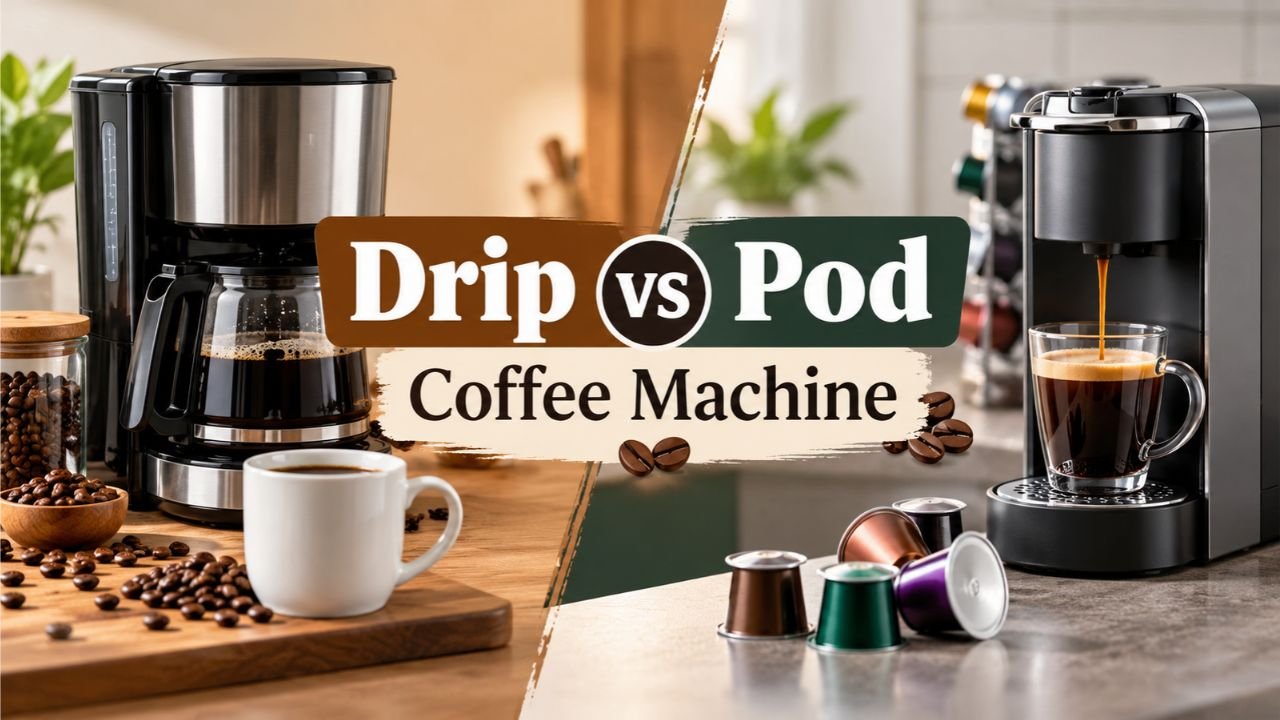
A drip coffee maker is generally better for brewing multiple cups at a lower ongoing cost, while a pod coffee maker is better for making one quick cup with minimal preparation. Drip machines offer more control over coffee strength, grind, and freshness. Pod machines prioritize convenience, consistent portions, and simple operation, making them attractive for busy mornings and smaller households.
Choosing the wrong brewing system can lead to unnecessary spending, wasted coffee, or a morning routine that takes more effort than expected. A machine that prepares an entire pot may be inconvenient for one person, while individually packaged pods can become expensive when several people drink coffee every day.
A suitable coffee machine should match the number of servings you prepare, the flavors you enjoy, and the time available for brewing. Getting those details right means fewer wasted ingredients, more predictable coffee, and a preparation routine that fits your household.
According to the National Coffee Association’s September 2026 National Coffee Data Trends report, 66% of American adults consumed coffee in the previous day, and 83% of those past-day coffee drinkers had coffee at home. Home brewing remains a major part of American coffee habits, making the choice of brewing equipment relevant to millions of households.
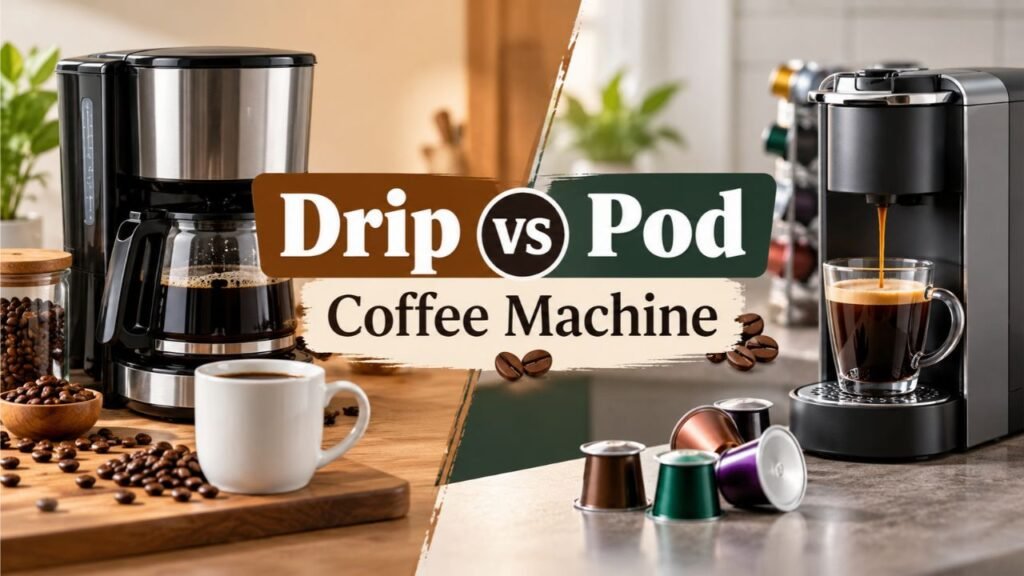
The Drip vs Pod Coffee Machine decision also involves differences in brewing technology. Traditional drip brewers pass heated water through loose coffee grounds, while pod systems use preportioned capsules or packets. Some pod machines prepare regular coffee, while others specialize in espresso-style drinks.
One detail I would pay close attention to is cost per serving. A pod machine may be affordable to purchase, but the price of compatible capsules can become a larger expense than the machine itself. A drip brewer may save money through bulk coffee purchases, especially when several cups are prepared together.
Comparing brewing methods, flavor, coffee strength, serving capacity, daily costs, cleaning, and waste reveals where each machine performs best. The practical differences also explain when a small drip brewer, reusable pod, or combination machine may be a better solution than either standard design.
What Is a Drip Coffee Machine vs a Pod Coffee Machine?
Both machines prepare coffee by moving heated water through ground coffee, but they handle the coffee and brewing process differently.
What Is a Drip Coffee Machine?
A drip coffee machine is an automatic brewer that heats water and distributes it over ground coffee held inside a filter basket.
The water passes through the grounds, extracts soluble coffee compounds, and flows into a glass or insulated carafe.
Most traditional drip machines are designed to prepare several cups during one brewing cycle.
Common features include:
- Removable filter baskets
- Glass or thermal carafes
- Programmable brewing timers
- Brew-strength settings
- Reusable or disposable filters
Some models also include built-in grinders or small-batch brewing options.
The main advantage is flexibility. You can select different coffee beans, adjust the amount of ground coffee, and prepare enough for multiple people.
What Is a Pod Coffee Machine?
A pod coffee machine is a single-serving brewer that prepares coffee using a premeasured pod or capsule.
The coffee is typically ground and packaged before purchase.
To make a drink, you insert a compatible pod, add water if necessary, select the desired settings, and start brewing.
The machine handles most of the extraction process.
Popular systems include Keurig K-Cup brewers and Nespresso machines.
These systems are not identical.
Keurig machines generally prepare regular coffee by passing heated water through a K-Cup pod. Nespresso Original machines use high-pressure extraction for espresso-style drinks, while Nespresso Vertuo machines use a spinning capsule system to prepare several coffee sizes.
Most pod brewers produce one serving per cycle.
How the Brewing Methods Differ
A drip coffee maker distributes water across loose grounds in a filter.
The coffee dose, grind size, and amount of water can be adjusted independently.
A pod brewer uses a prepared portion that limits the amount of ground coffee available for extraction.
Some pod machines allow changes to serving size, temperature, or brew strength, but the coffee dose inside a disposable capsule generally remains fixed.
This creates the central trade-off.
Drip brewing gives you more control over the coffee recipe. Pod brewing reduces the preparation steps required to produce a drink.
Key Takeaway: Drip machines use loose coffee grounds and are well suited to batch brewing. Pod machines use prepared capsules and focus on simple, single-serving coffee preparation.
Drip vs Pod Coffee Machine: Side-by-Side Comparison
The following table highlights the differences that matter most when choosing between the two brewing systems.
| Feature | Drip Coffee Machine | Pod Coffee Machine |
| Brewing method | Hot water passes through loose grounds | Water passes through a compatible pod or capsule |
| Main purpose | Brewing individual or multiple servings | Preparing one serving at a time |
| Coffee format | Ground coffee or whole beans with a grinder | Prepackaged pods or compatible reusable capsules |
| Typical brew time | Several minutes per batch | Often around 1–2 minutes per serving |
| Flavor control | High | Limited to moderate |
| Coffee freshness | Can use beans ground immediately before brewing | Usually uses sealed preground coffee |
| Cost per serving | Generally lower with bulk coffee | Generally higher with disposable pods |
| Preparation | Requires measuring coffee and water | Insert pod and select settings |
| Cleanup | Filter basket, grounds, and carafe | Used pod, drip tray, and pod holder |
| Serving capacity | Often several cups per cycle | Usually one cup per cycle |
| Coffee variety | Broad bean and grind selection | Limited to compatible pod formats |
| Waste | Coffee grounds and optional paper filters | Coffee grounds plus individual pod packaging |
| Best for | Families and frequent coffee drinkers | Solo drinkers and convenience-focused users |
Neither design guarantees better coffee.
Brewing temperature, coffee quality, water quality, machine construction, and personal taste all influence the final result.
Which Makes Better-Tasting Coffee: Drip or Pod?
A good drip machine generally offers more potential for adjusting flavor, but a quality pod brewer can produce coffee that satisfies many drinkers.
The difference is largely about freshness, extraction, and control.
Coffee Freshness and Aroma
Freshly ground coffee can preserve more of the aromas released during grinding.
With a drip brewer, you can buy whole beans and grind only the amount required for each batch.
This gives you more control over freshness.
Pod machines normally use preground coffee sealed inside capsules.
The packaging protects the grounds from air and moisture during storage, but it cannot restore aromatic compounds already lost during processing.
A well-sealed pod can still produce pleasant coffee.
Yet a drip machine paired with freshly ground beans usually offers greater freedom to explore different aromas and flavor profiles.
Brewing Temperature and Extraction
Extraction is the process of dissolving flavor compounds from coffee grounds into water.
Water temperature, contact time, grind size, and coffee-to-water ratio all influence the result.
The Specialty Coffee Association evaluates certified home brewers for temperature control, brewing time, extraction quality, and consistency.
For traditional filter brewing, water temperatures around 195–205°F are commonly recommended.
Quality drip brewers are designed to operate within an appropriate brewing range.
Less expensive models may struggle with temperature consistency or even water distribution.
Pod machines manage many settings automatically.
This reduces user adjustments, but performance can still vary between machines and capsule systems.
Strength and Flavor Customization
Drip coffee offers greater control over strength because you can change the amount of coffee relative to the water.
For example, adding more ground coffee while keeping the water volume similar generally produces a stronger brew, assuming extraction remains suitable.
Pod machines often have strength settings, but those settings do not add more coffee to the capsule.
Some adjust contact time, flow, or other brewing parameters.
Choosing a smaller serving size can also produce a more concentrated drink from the same pod.
If you frequently adjust your coffee recipe, I would choose a drip machine.
If you prefer consistent coffee without measuring, a pod machine is more convenient.
Espresso-Style Drinks Are a Separate Consideration
Not every pod machine produces the same kind of coffee.
Nespresso Original machines are designed primarily for espresso-style servings.
Nespresso Vertuo machines prepare a broader selection of serving sizes, including espresso and larger coffees.
Keurig K-Cup brewers primarily produce regular brewed coffee rather than traditional espresso.
A standard drip brewer produces filter coffee and does not create true espresso.
If espresso or espresso-based milk drinks are your main preference, compare the relevant capsule system with an espresso machine rather than assuming all pod brewers are interchangeable.
Key Takeaway: Drip coffee offers more control over beans, grind, and strength. Pod machines provide convenient, repeatable results, but taste varies with the specific system and coffee used.
Which Coffee Machine Is Cheaper in the Long Run?
Drip machines generally cost less to operate per serving when using ordinary bulk ground coffee.
Pod machines often require a higher recurring expense because each serving comes in an individually packaged capsule.
The actual difference depends on the coffee purchased, serving size, and preparation habits.
Initial Machine Cost
Both categories include affordable and premium models.
Basic drip coffee makers can be relatively inexpensive.
Higher-end drip machines may include advanced heating systems, programmable settings, insulated carafes, or built-in grinders.
Pod machines also span several price levels.
Compact single-serving models can be affordable, while larger capsule systems with milk-frothing equipment or advanced controls cost more.
A separate grinder adds to the purchase cost of a drip setup if you plan to use whole beans.
Comparing machine prices alone can therefore be misleading.
Cost Per Cup: A Practical Example
To compare ongoing costs, consider two hypothetical coffee purchases.
These prices are examples for calculation, not current retail quotations.
Assume:
- A 12-ounce bag of ground coffee costs $12.
- Each large drip serving uses 20 grams of coffee.
- A box of 12 disposable coffee pods costs $12.
- Each pod produces one serving.
A 12-ounce bag contains approximately 340 grams of coffee.
At 20 grams per serving, the bag provides about 17 servings.
| Cost Factor | Drip Coffee | Pod Coffee |
| Example coffee package price | $12 | $12 |
| Approximate servings | 17 | 12 |
| Coffee cost per serving | $0.71 | $1.00 |
| Cost for two servings daily | $1.42 | $2.00 |
| Approximate annual coffee cost | $520 | $730 |
Under these assumptions, drip brewing saves approximately $210 annually for a household preparing two servings every day.
This calculation excludes disposable filters, electricity, water, maintenance products, machine purchase price, and coffee waste.
It also does not establish identical beverage strength between a drip serving and a pod serving.
Premium coffee beans may cost more than economical pods, so drip brewing is not guaranteed to be cheaper in every comparison.
How to Calculate Your Actual Coffee Cost
For drip brewing, divide the total package price by the number of servings obtained from the coffee.
For pod brewing, divide the package price by the number of capsules.
Then multiply the difference by the number of daily servings and days used.
For example, a difference of $0.30 per serving becomes $219 per year when preparing two servings daily.
This is why even small differences in coffee prices matter for frequent drinkers.
Hidden Costs and Wasted Coffee
Drip brewing may involve paper filters, grinder maintenance, and periodic replacement of small components.
Pod machines may require descaling products, replacement water filters, and compatible capsules.
Waste also changes the calculation.
If you regularly brew a full pot but throw away half of it, the actual cost per consumed cup increases.
For someone drinking only one occasional cup, a pod machine may prevent enough coffee waste to justify the higher capsule price.
Key Takeaway: Drip brewing generally has a lower ingredient cost per serving. Pod machines trade higher recurring capsule costs for convenience and portion control.
Brewing Speed and Convenience: Which Is Easier?
Pod machines typically offer the simplest routine for making one cup.
Drip machines become more convenient when several servings are needed together.
Making One Cup of Coffee
A pod machine requires very little preparation.
Insert the capsule, choose a drink size, and begin brewing.
Many models complete a serving in roughly one or two minutes after the machine is ready, although heating and brewing times vary.
There is no need to measure loose coffee or prepare a paper filter.
For one person rushing to work, this convenience can be attractive.
A traditional drip machine requires additional steps such as measuring coffee, filling the filter basket, and washing the carafe afterward.
Brewing Coffee for Multiple People
The comparison changes when several people want coffee.
A drip brewer can prepare an entire pot during one cycle.
This allows everyone to pour a serving without starting another brew.
A pod machine usually requires a separate capsule and brewing cycle for each person.
Preparing four drinks means inserting and processing four pods.
Although each individual serving is quick, making several drinks consecutively can take longer than preparing one batch.
Programmable Brewing Features
Many drip coffee makers have programmable timers.
You can prepare the filter and coffee grounds before bed and schedule the machine to begin brewing in the morning, following the manufacturer’s instructions.
This reduces hands-on work when you wake up.
Some pod machines also include programmable features, quick heating, or saved drink preferences.
For morning routines, I would compare the total preparation process rather than brewing speed alone.
A programmable drip machine may have coffee ready before you enter the kitchen, while a pod machine prepares a fresh serving when requested.
Key Takeaway: Pod machines are generally quicker for one immediate serving. Drip machines are more convenient for groups and can reduce morning preparation through programmable brewing.
Coffee Capacity and Cup Size Differences
Machine capacity can be misleading because coffee manufacturers do not always use the same definition of a cup.
Understanding serving size prevents purchasing a machine that produces less coffee than expected.
Why a 12-Cup Drip Maker Does Not Mean 12 Large Mugs
Many drip coffee makers define a cup as approximately 5–6 fluid ounces.
That is smaller than a standard 8-fluid-ounce measuring cup and much smaller than some travel mugs.
For example, a 12-cup machine using 5-ounce measurements has a nominal capacity of approximately 60 fluid ounces.
That represents five 12-ounce servings by volume, before accounting for water retained by the coffee grounds.
The machine’s advertised capacity should therefore be checked against the actual water reservoir or carafe markings.
Pod Coffee Serving Sizes
Pod brewers commonly offer several serving sizes.
For example, some Keurig models allow users to select 4-, 6-, 8-, 10-, or 12-ounce servings.
A larger serving does not mean the capsule contains more coffee.
Using the same pod with more water may produce a weaker drink.
Nespresso machines use different capsules and serving sizes, with some systems focused on espresso and others designed for larger coffees.
Before buying a pod machine, check that it can prepare your preferred beverage volume with suitable strength.
Small-Batch Drip Brewers
A large carafe is not mandatory for drip brewing.
Some automatic drip machines are designed to prepare one or two mugs.
Others include small-batch settings that adjust brewing for reduced quantities.
These models provide access to loose ground coffee without requiring a full pot.
A compact drip brewer is worth considering if you drink one cup daily but want to avoid disposable capsules.
Key Takeaway: Check actual fluid-ounce capacity rather than advertised cup counts. Pod brewers serve individual mugs, while drip machines range from single-serving models to large carafe systems.
Which Coffee Machine Is Easier to Clean and Maintain?
Pod machines generally require less cleanup immediately after brewing.
Both designs still require regular washing and descaling.
Cleaning a Drip Coffee Machine
After brewing, remove the used coffee grounds and filter.
Wash the filter basket and carafe according to the manufacturer’s directions.
Wipe away spills and rinse removable components as recommended.
Reusable mesh filters require more washing than disposable paper filters.
Coffee oils can accumulate on surfaces that contact the brewed drink.
Over time, mineral deposits may also form inside the heating and water-delivery system.
Regular descaling helps prevent these deposits from interfering with water flow and heating.
Cleaning a Pod Coffee Machine
Daily cleanup is simpler because the used coffee remains inside the capsule.
Remove the spent pod after it has cooled enough to handle safely.
Empty the drip tray and rinse the removable parts as directed.
Pod machines still require cleaning around the capsule holder, brew head, and water reservoir.
Keurig machines can develop clogged entrance or exit needles when coffee grounds collect in the pod mechanism.
Follow the manufacturer’s instructions for cleaning these parts, since the needles can be sharp.
Descaling Requirements
Both drip and pod machines develop mineral deposits when heated water passes through internal components.
The rate of buildup depends partly on water hardness and machine use.
Keurig commonly recommends descaling compatible brewers every three to six months, although some models specify different intervals.
Drip coffee makers also need periodic descaling according to their manuals.
Use the manufacturer’s recommended descaling solution and follow the required rinsing procedure.
Do not assume vinegar is suitable for every model.
Key Takeaway: Pod machines minimize daily coffee-ground cleanup, but both machine types need regular cleaning and descaling to maintain proper brewing.
Environmental Impact: Drip Coffee vs Coffee Pods
Both brewing methods consume resources and produce waste.
The differences involve packaging, coffee grounds, filters, brewing habits, and disposal options.
Disposable Pod Packaging
Single-use pods contain coffee along with plastic, aluminum, paper, or other packaging materials.
That creates individual packaging waste for each serving.
Some K-Cup pods use recyclable polypropylene plastic, but acceptance varies by local recycling program.
A recyclable label does not guarantee that every municipal facility accepts the item.
Preparation requirements may include separating the lid, filter, and used coffee.
Nespresso provides capsule collection programs for certain locations and systems, including return options for its aluminum capsules.
Actual recycling depends on participation and collection availability.
Drip Coffee Grounds and Filters
Drip machines generally produce spent coffee grounds and, when used, disposable paper filters.
Coffee grounds may be composted where appropriate facilities or home composting methods are available.
Some paper coffee filters can also be composted.
Reusable metal or mesh filters reduce recurring filter purchases and filter waste.
Still, drip coffee is not automatically free from environmental costs.
The production of coffee beans, brewing electricity, water use, machine manufacturing, and wasted coffee all contribute to the overall impact.
Brewing more coffee than you drink can undermine some of the advantages of batch preparation.
Reusable Coffee Pods
Some pod machines accept reusable capsules that can be filled with ground coffee.
This reduces the need to purchase a new disposable pod for every serving.
Reusable capsules also offer greater flexibility in coffee selection.
The trade-off is more preparation and cleanup.
You must fill the capsule, remove the used grounds, and wash it after brewing.
Compatibility is not universal, so check the exact machine model before buying a reusable pod.
Key Takeaway: Drip machines generally avoid individual capsule packaging, while reusable pods can reduce pod waste. Actual environmental impact also depends on coffee waste, energy use, and disposal habits.
Coffee Choices and Pod Compatibility
Drip and pod machines differ in the types of coffee they accept.
This becomes important if you regularly switch between blends, roasts, or beverage styles.
Freedom to Choose Coffee Beans
A drip coffee maker can use almost any suitable ground coffee.
You can purchase supermarket blends, specialty beans, decaffeinated coffee, or freshly roasted whole beans.
If the grind is appropriate for the filter basket, you have considerable freedom in choosing coffee.
You can also change the coffee-to-water ratio to suit your taste.
This makes drip brewing appealing to people who enjoy trying different roasts and origins.
Pod Systems Are Not Universally Compatible
Pod machines usually operate within a specific capsule system.
Keurig K-Cup pods and Nespresso capsules are not interchangeable.
Even Nespresso Original and Vertuo systems use different capsule designs.
Some third-party capsules are compatible with certain machines, but compatibility must be checked.
A machine’s capsule format may influence long-term coffee choices and prices.
Before purchasing, I recommend checking the availability and cost of the exact pods you expect to use regularly.
Different Drinks for Different People
Pod machines can be convenient in households where people prefer different beverages.
One person might want regular coffee, another decaf, and someone else a flavored drink.
Compatible pods make switching between these options simple.
With a drip machine, preparing several different blends usually means making separate batches or using another brewing method.
For households sharing one preferred coffee, a drip carafe is simpler.
For households with very different drink preferences, the flexibility of individual pods can justify their cost.
Key Takeaway: Drip machines accept a broad selection of loose coffee. Pod machines simplify switching drinks but limit choices to compatible capsule systems.
Should You Choose a Drip or Pod Coffee Machine?
The most useful buying decision comes from your daily serving pattern rather than a single specification.
Choose a Drip Coffee Machine If You Brew Several Cups
A drip coffee maker is the better starting point if you regularly prepare coffee for two or more people.
It also makes sense if you drink several cups throughout the morning and prefer the same blend.
I recommend drip brewing when your priorities include lower recurring coffee costs, fresh beans, and control over the brewing recipe.
Look for a machine with a suitable carafe capacity, removable filter basket, and reliable temperature control.
An insulated thermal carafe is attractive if you prefer keeping coffee warm without leaving it on a hotplate.
Choose a Pod Coffee Machine If Convenience Comes First
A pod coffee maker is appealing if you usually drink one cup at a time.
It is also useful when household members drink coffee at different times or prefer different flavors.
The main advantages are minimal measuring, quick individual preparation, and simple cleanup.
Before purchasing, compare capsule prices and confirm compatibility with the drinks you prefer.
A compact pod machine may also fit a small kitchen, although some models require substantial space for water reservoirs or capsule storage.
Consider a Combination Coffee Maker
A dual coffee maker combines more than one brewing format in a single appliance.
Some models prepare a full drip carafe and also accept compatible single-serving pods.
Others offer a podless single-cup option using loose grounds.
This arrangement makes sense for households that regularly need both a full pot and an individual serving.
Combination machines can be larger and more complicated to maintain than basic models.
I would only pay extra for a dual brewer if both brewing functions will receive regular use.
Key Takeaway: Choose drip for repeated or shared brewing and pod for single-serving convenience. A dual machine is worth considering when both routines are common in the same household.
Common Mistakes When Choosing Between Drip and Pod Machines
One mistake is comparing only the purchase price.
An inexpensive pod machine may cost more to operate over time if capsules are purchased daily.
Another is assuming every drip machine produces better coffee.
Brewing temperature, grind quality, coffee freshness, and water distribution still matter. A poorly designed drip machine may prepare disappointing coffee.
Some buyers also overlook the actual serving size. A machine advertised as a 12-cup brewer may produce fewer large mugs than expected.
Purchasing a pod machine without checking capsule compatibility is another costly mistake. Different systems require specific pod formats, and some offer fewer third-party choices.
It is also easy to underestimate cleaning requirements. Pod machines reduce loose-ground cleanup, but they still need reservoir cleaning, pod-holder maintenance, and descaling.
Finally, avoid assuming a full-pot machine is economical when most of the coffee goes unused. Brewing only the amount you drink is a better way to control both cost and waste.
Conclusion
The Drip vs Pod Coffee Machine comparison favors drip brewing for households that regularly prepare several servings and want greater control over coffee strength, freshness, and ongoing costs. Pod machines are better suited to people who value quick individual servings, consistent preparation, and minimal daily effort.
Drip machines provide flexibility with coffee beans and brewing ratios, while pod machines simplify the process through premeasured capsules. Running costs, serving capacity, cleaning requirements, and capsule compatibility are the most useful details to compare before purchasing.
For most households with multiple daily coffee drinkers, I would choose a quality drip coffee maker. For someone who drinks one occasional cup and values convenience above everything else, a pod machine can be a practical alternative. The better machine is the one that matches how coffee is actually prepared and consumed in your home.
FAQs About Drip and Pod Coffee Machines
Is a drip coffee maker better than a pod coffee maker?
A drip coffee maker is generally better for preparing multiple cups, controlling coffee strength, and reducing ongoing ingredient costs.
A pod coffee maker is better for making one convenient serving with minimal measuring and cleanup.
Drip brewing offers greater flexibility with beans and grind sizes, while pod machines provide more standardized preparation.
Neither guarantees better flavor because machine quality and the coffee itself influence the result.
Does drip coffee taste better than pod coffee?
Drip coffee can taste better when prepared with fresh beans, an appropriate grind, and a machine that controls water temperature and extraction.
Pod coffee can also taste pleasant and consistent, especially when using quality capsules.
Drip machines offer more adjustments to the coffee recipe.
Pod systems limit some of those adjustments in exchange for convenience. Personal preference remains an important factor.
Is pod coffee more expensive than drip coffee?
Disposable coffee pods usually cost more per serving than ordinary ground coffee purchased in larger packages.
The difference becomes noticeable when several cups are prepared every day.
Premium ground coffee may cost more than economical pods, and unused drip coffee increases the cost per consumed serving.
Compare package prices, serving quantities, and your actual brewing habits to calculate the difference.
Reusable pods may reduce recurring capsule expenses.
Which coffee machine is faster, drip or pod?
Pod machines are generally faster for preparing one serving, often completing the brewing process in around one or two minutes after the machine is ready.
Drip coffee makers usually take several minutes to prepare a batch.
For multiple servings, drip machines may be more convenient because one brewing cycle fills a carafe.
Programmable drip machines can also prepare coffee automatically at a scheduled time.
Can a pod coffee machine make regular coffee?
Yes. Many pod machines prepare regular coffee, but the available drinks depend on the capsule system.
Keurig K-Cup brewers generally make regular brewed coffee in several serving sizes.
Nespresso Vertuo machines prepare both espresso and larger coffee servings, while Nespresso Original focuses on espresso-style drinks.
Check the machine’s supported beverages and capsule format before buying.
Can you use ground coffee in a pod coffee machine?
Some pod coffee machines accept reusable capsules or adapters that hold ordinary ground coffee.
Certain Keurig models support compatible reusable K-Cup filters.
Other capsule systems may have limited or no manufacturer-supported reusable options.
Check the exact model before purchasing an adapter.
Using loose grounds may lower the cost per serving, but it also requires filling, emptying, and washing the reusable capsule.
Which lasts longer, a drip or pod coffee maker?
Neither machine type has a guaranteed longer lifespan.
Durability depends on build quality, heating components, water hardness, cleaning habits, and frequency of use.
Drip machines may have relatively simple mechanisms, while pod brewers can include additional capsule-handling components and specialized brewing systems.
Both require descaling and regular maintenance.
A well-maintained machine from either category can provide years of service, but individual reliability varies considerably.
Should I buy a drip coffee maker or a Keurig for one person?
A Keurig can be a practical choice for one person who drinks a single cup and prefers quick preparation with little cleanup.
A small drip coffee maker may be better if you want to use fresh ground coffee, experiment with flavor, or reduce disposable pod purchases.
A full-size carafe machine is less attractive if you frequently throw away leftover coffee.
I would compare a compact Keurig with a one- or two-cup drip model before choosing a full-size brewer.